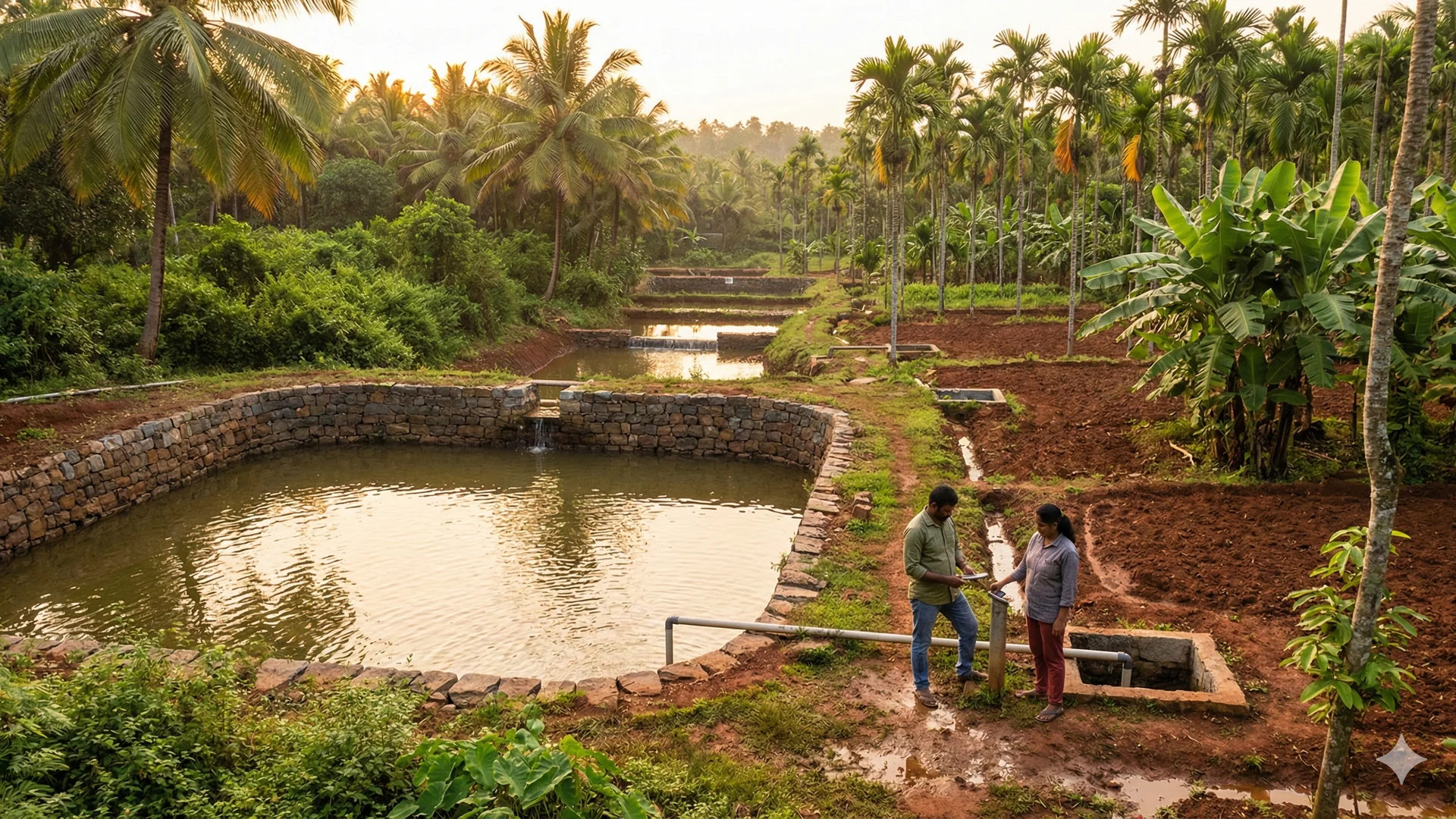
The climate is changing, so must our investments. In a world of unpredictable monsoons and rising temperatures, the "Monoculture" farm is a sitting duck. The "Permaculture" farm is a fortress.
The End of predictable Agriculture
Traditional farming near Bangalore has long relied on a specific set of seasonal norms. But as heatwaves become more intense and rainfall more erratic, these norms are breaking. Investors who ignore this "Climate Risk" are essentially gambling with their land's value.
At One Acre Farms, we don't just "plant trees"; we design **Climate-Resilient Habitats**. By using the principles of **Permaculture**, we build assets that are designed to thrive in the "New Normal."
Future-Proofed Farmland
Our projects feature advanced swales, earthworks, and soil restoration. Invest in land that is built to survive and thrive.
See Resilience-First Projects3 Layers of Climate Protection
1. Water Sovereignty: The Earth-Sponge
Most farms lose 80% of their rainwater as runoff. We use **Swales** (level contour trenches) to slow, spread, and sink every drop of monsoon rain back into the underground aquifer. By turning your acre into an "Earth Sponge," we ensure your plantation has access to high water-tables even during a multi-month drought.
2. Diversity as Insurance
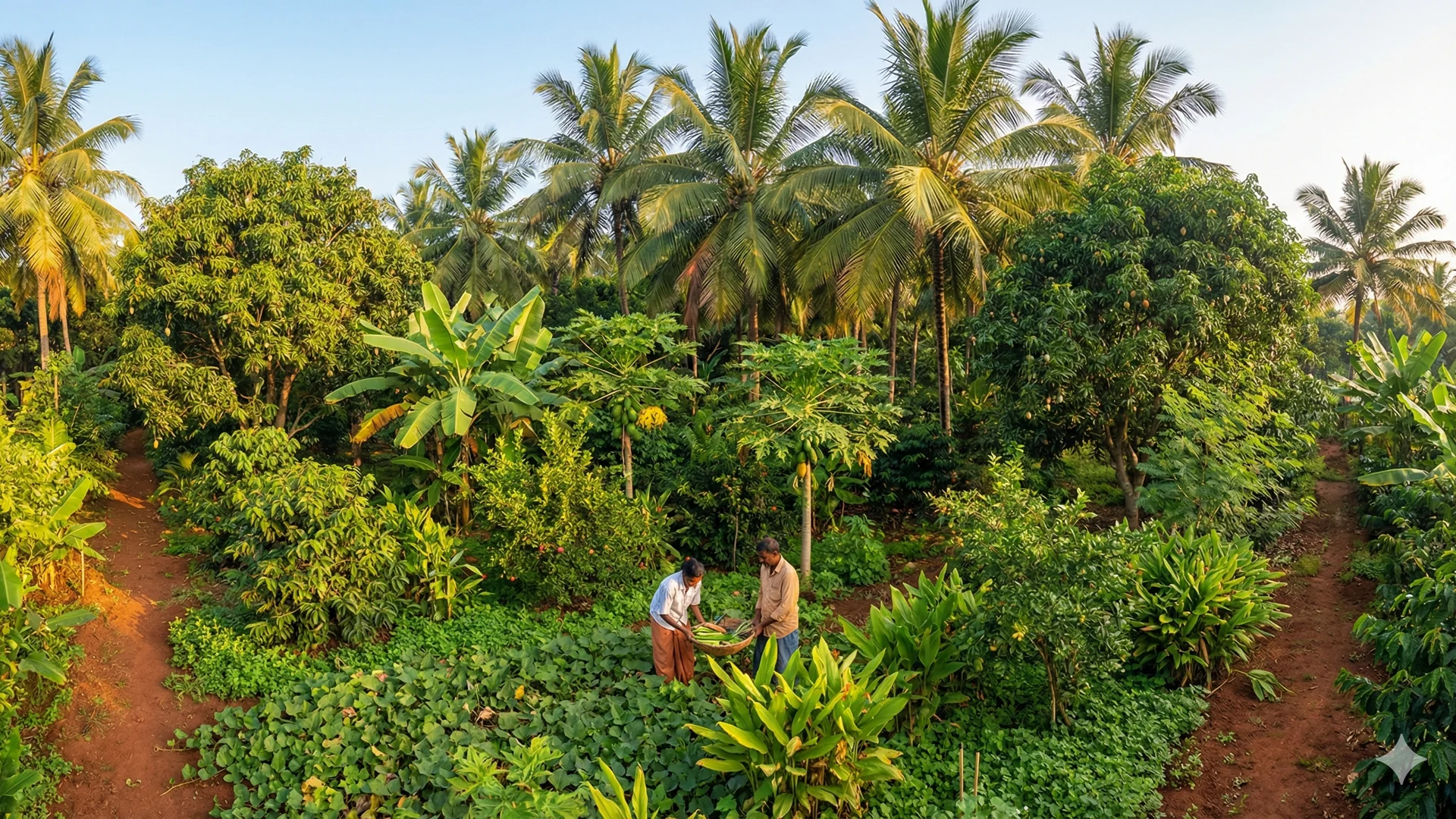
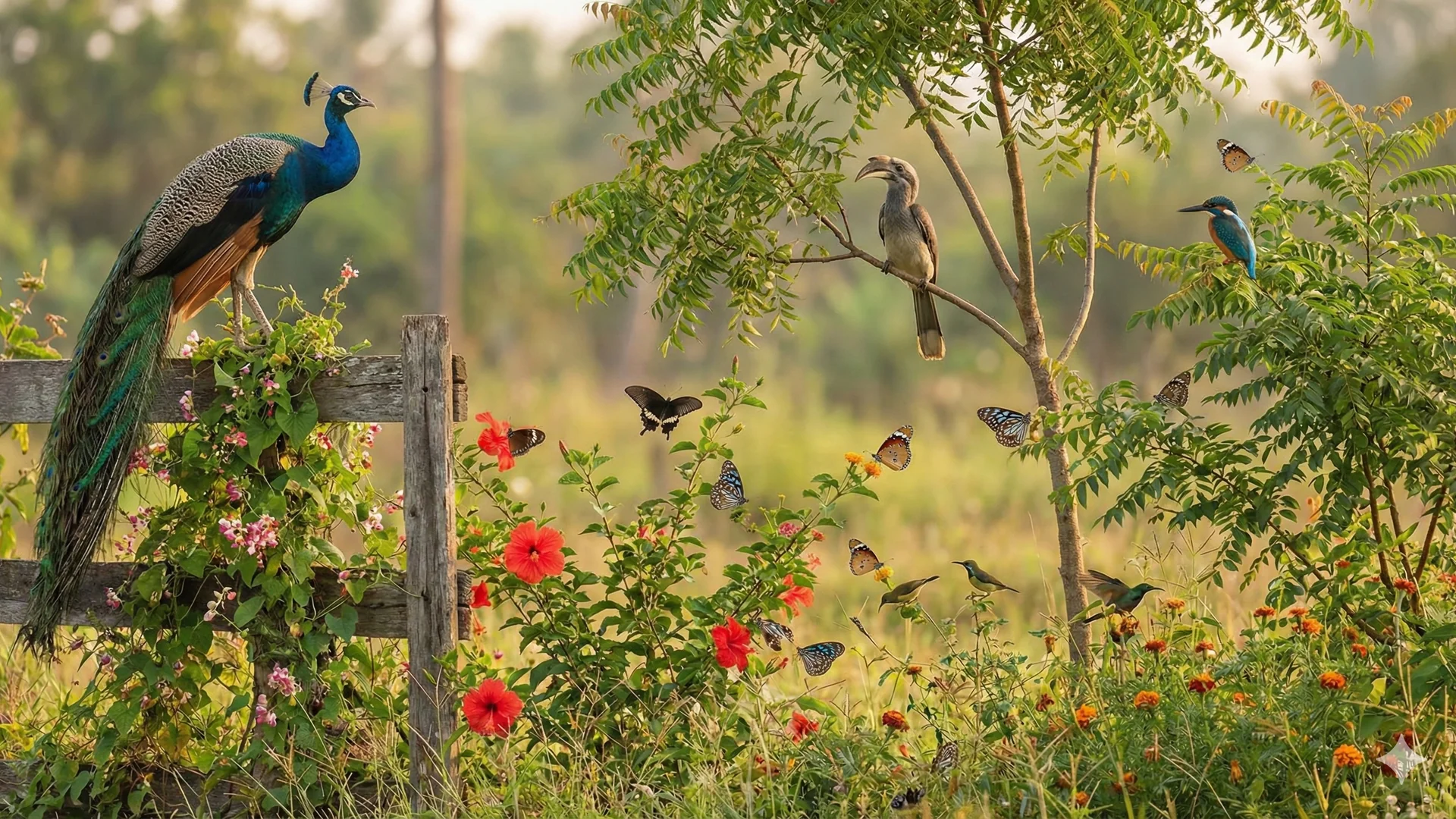
A single-crop farm (like only Mango or only Sandalwood) is at high risk from a single pest or a single extreme weather event. We use **Guild-based Planting.** By surrounding your primary trees with supplementary fruit, nitrogen-fixers, and pollinators, we create a mutually supportive ecosystem. If one species has a bad year, the other three thrive.
3. The Micro-Climate Shield: Micro-Forestry
Open, exposed land can be 5-10 degrees hotter than a forested area. We use **High-Density Borders** and multi-layered canopies to create a cooling micro-climate on your acre. This protects your primary revenue crops from "heat stress," ensuring consistent fruit sizes and healthy timber growth regardless of the outside temperature.
The Risk of Inaction: The Approaching Water Crisis
The most significant threat to agricultural land value in Southern India is water depletion. Traditional farming relies heavily on deep borewells, which are rapidly drying up in many parts of the state due to over-extraction and poor monsoon recharge. Land without water quickly becomes a liability rather than an asset.
When we conceptualize our projects, such as the water-secure Lakeside Farm Retreat, we model for a 30-year hydrological timeline. By implementing aggressive rainwater harvesting, contour trenching, and selecting drought-tolerant timber species, we decouple the farm's success from municipal water supplies or deep aquifer gambling. The resilience of the water system directly dictates the long-term appraisal value of the land.
Carbon Sequestration as a Future Asset Class
Climate-resilient permaculture also opens a possible future option: carbon credits. As global corporations look to offset their emissions, the demand for verified carbon sequestration is skyrocketing.
A fast-growing timber forest on a managed acre acts as a massive carbon sink. While the Indian retail carbon market is still maturing, planting a dense, multi-layered forest today positions you perfectly to capitalize on this emerging asset class over the next decade. It is this forward-thinking methodology that separates a traditional farm purchase from investing in genuine managed farmland around Bangalore.
The Economics of Shade: Lowering the Biological Overhead
Most farm owners underestimate the "Cost of Heat." High temperatures don't just stress plants; they evaporate water and degrade soil biology. By designing an orchard with a "High-Shade Index," we lower the biological overhead of your acre.
A shaded soil can be up to 15 degrees cooler than one exposed to the sun. This means your soil microbiology stays active year-round, continuing to build the organic matter that holds onto nutrients. This cooling effect also reduces the energy required to keep your Net-Zero Farmhouse comfortable, creating a perfect synergy between the land and the home.
Biological Hydrology: Beyond the Borewell
In a climate-resilient system, we move from "Mechanical Irrigation" to "Biological Hydrology." Instead of relying purely on pumps, we use deep-rooted trees like Sandalwood and Tamarind to act as "Hydraulic Pumps," pulling water from deep aquifers and releasing it into the upper soil layers for the benefit of smaller fruit trees.
This vertical movement of water ensures that your forest thrives even when surface water is scarce. When you invest in a project with integrated biological hydrology, you are buying into a system that is fundamentally more stable than any mono-crop plantation. This is the hallmark of a Sustainable Yield Model.
Conclusion: Investing for the Next 50 Years
Climate change isn't a future problem; it's a current reality for land owners. By choosing managed habitats that prioritize permaculture design, you aren't just being "eco-friendly"—you are being a smart investor. You are securing your perimeter against the elements and ensuring that your asset remains productive for generations to come.
Discuss Resilience Strategies
Curious about how we handle water management or soil cooling in a specific project? Our agronomists can provide a detailed 'Resilience Audit' of our current opportunities.
Explore More Farm Opportunities
- For a complete overview, read our permaculture farming near Bangalore.
- Exploring Opportunities
- How To Start Homesteading / Farm House L...
- Discover your ideal rural escape with our Hilltop Farm Retreat.
- Deepen your research by exploring our managed farmland around Bangalore.
Myth vs. Reality
"Permaculture is more expensive than traditional farming."
"One acre is too small to have its own micro-climate."
"I can just dig more borewells if it gets dry."
Interested in owning farmland?
Schedule a free site visit to explore our managed farmland projects near Bangalore.