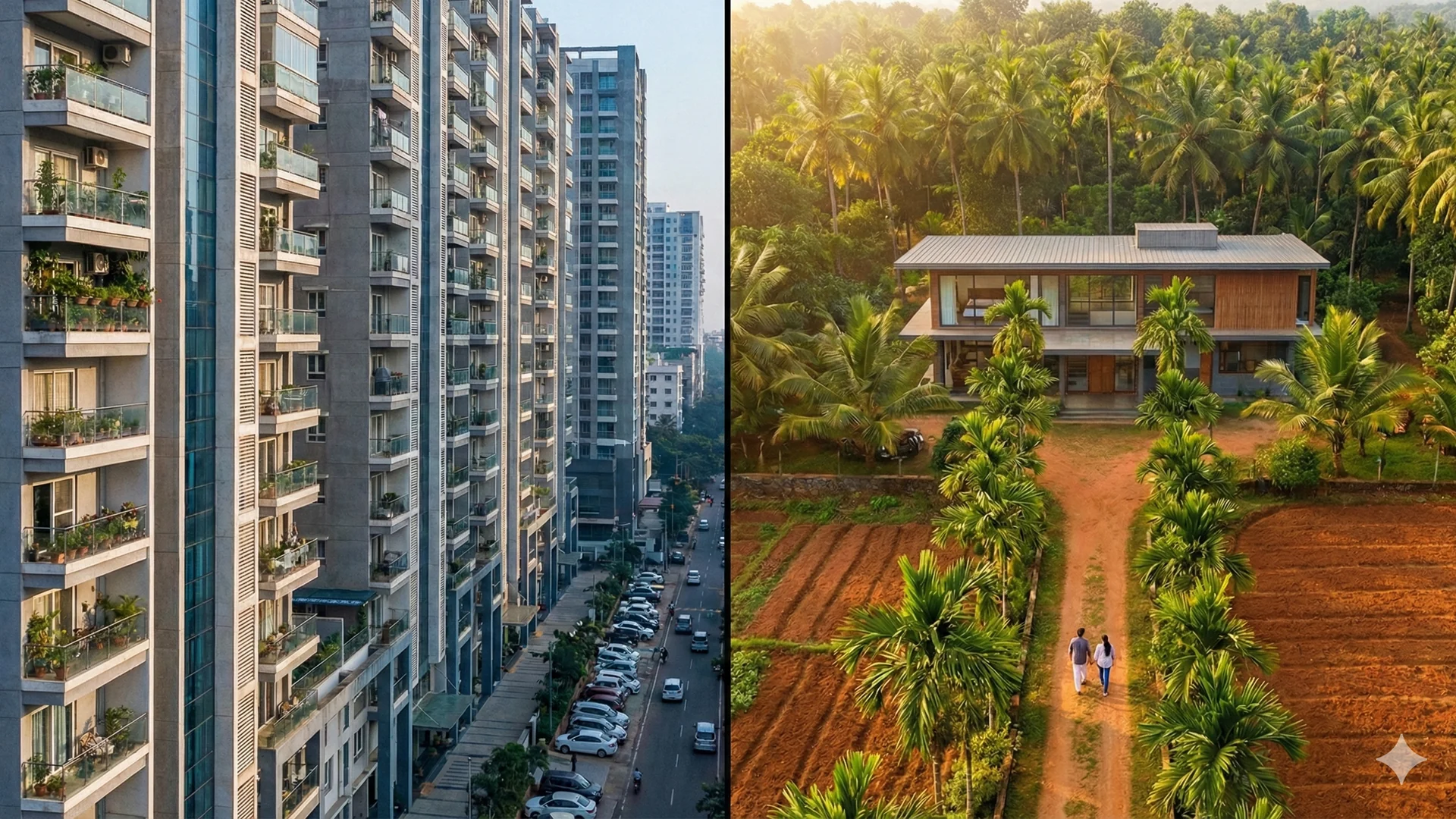
Imagine a forest that requires no weeding, no chemical fertilizers, and very little watering, yet provides an abundance of fresh fruits, nuts, and vegetables. This isn't a fantasy—it's the reality of a well-designed permaculture food forest.
What is a Food Forest?
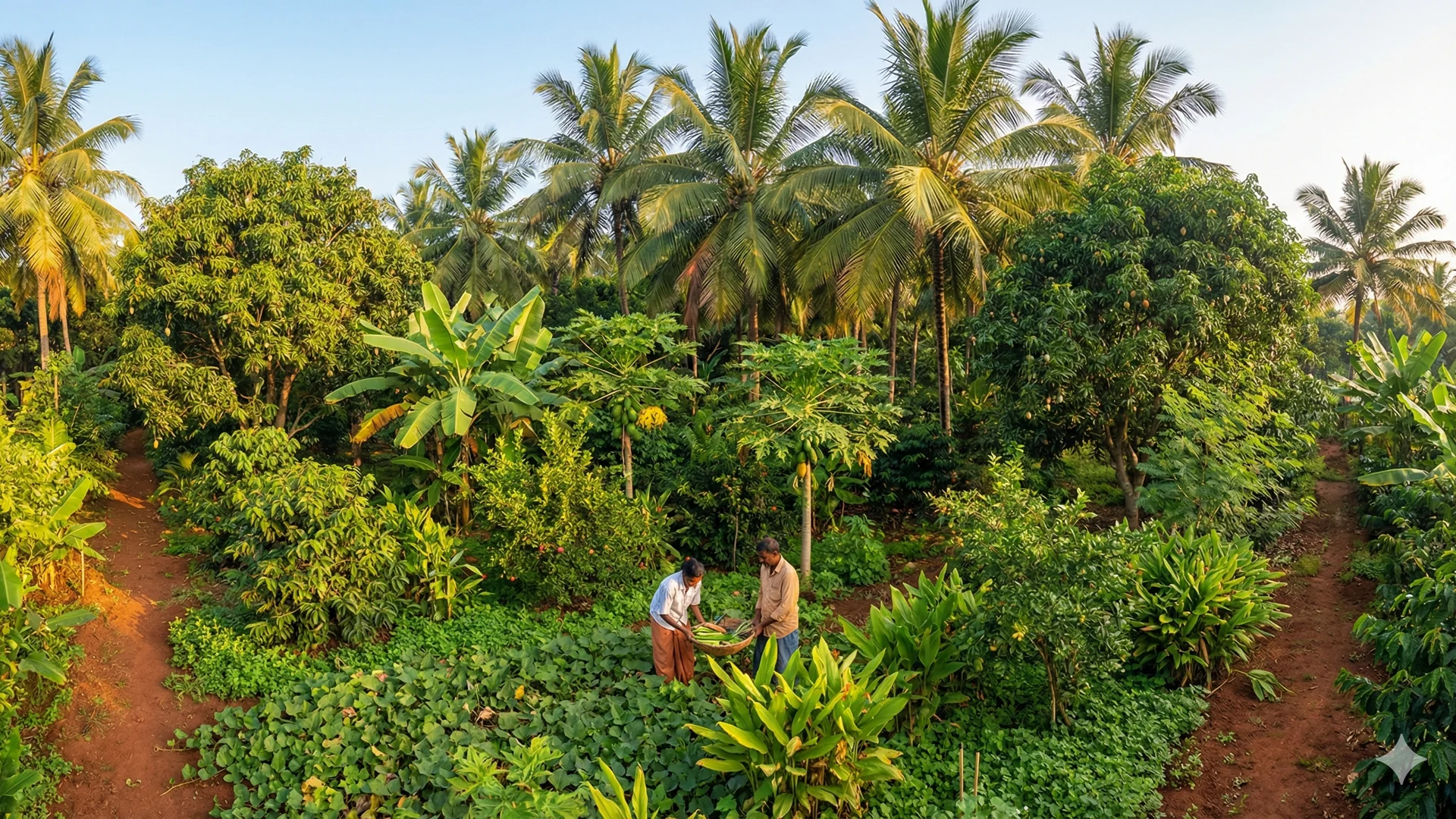
A food forest, or forest garden, is a low-maintenance, sustainable, plant-based food production and agroforestry system based on woodland ecosystems. Unlike a traditional orchard or vegetable patch, a food forest is multi-layered. It mimics the structure of an edge-of-the-forest environment, where biodiversity is highest.
In the Bangalore region, with our distinct wet and dry seasons and semi-arid climate, the food forest model is particularly powerful. It creates its own microclimate, retaining moisture and building soil fertility even when the surrounding landscape is dry.
Featured Opportunity: Community Food Forest Project
Want to see a food forest in action? Join our community project where we are establishing a five-acre multi-layered ecosystem. Learn by doing.
View Project ProgressThe Seven Layers of a Food Forest
To maximize productivity in a small space—like our one-acre plots—we design in three dimensions. A classic permaculture food forest has seven distinct layers:
- The Canopy: Tall timber or fruit trees like Mango, Jackfruit, or Tamarind. These provide shade and structural support.
- The Understory: Smaller fruiting trees like Lemon, Pomegranate, or Guava.
- The Shrub Layer: Berry bushes and perennial vegetables like Curry Leaf or Hibiscus.
- The Herbaceous Layer: Perennial herbs like Lemongrass, Galangal, and Basil.
- The Ground Cover: Low-growing plants that protect the soil, like Sweet Potato, Pumpkin, or Mint.
- The Rhizosphere: Root crops like Ginger, Turmeric, and Radishes.
- The Vertical Layer: Climbing vines like Pepper, Grapes, or Beans.
Designing for the Bangalore Climate
The South Indian climate offers incredible growth potential, but water management is key. Our designs start with swales (water-harvesting ditches on contour) that capture monsoon runoff and soak it deep into the soil. This "water banking" is what allows a food forest to remain productive through the scorching summer months.
We also prioritize nitrogen-fixing trees like Gliricidia and Sesbania. These "fertility engines" are chopped and dropped as mulch, providing a constant stream of organic matter to the soil without the need for external fertilizers.
The "One Acre" Advantage
Why one acre? It's the "Goldilocks" size for a managed food forest. It's large enough to create a self-sustaining ecosystem with significant timber and fruit yields, but small enough to be carefully designed and intensively managed.
At One Acre Farms, we help you transition your land from a bare plot to a thriving canopy. In the first few years, we focus on establishing the "skeleton" of the forest—the canopy and understory trees. As they provide shade, we introduce the lower layers, creating a complex, resilient web of life.
Beyond Food: The Holistic Benefits
A food forest is more than just a source of calories. It's a sanctuary for biodiversity. You'll see an increase in birds, butterflies, and beneficial insects. These aren't just "nice to have"; they are essential workers that manage pests and pollinate your crops.
For the farm owner, a food forest is a space of profound tranquility. Walking through your own forest, harvesting your own fruit, and watching the seasons change is a deeply fulfilling experience. It's a legacy you build for yourself and for future generations.
Start Building Your Food Forest
Ready to turn your land into a self-sustaining oasis? Our team of permaculture experts is here to guide you every step of the way.
Explore More Farm Opportunities
- For a complete overview, read our permaculture farming near Bangalore.
- Monsoon Mastery
- Growing Gooseberries
- Discover your ideal rural escape with our Hilltop Farm Retreat.
- Deepen your research by exploring our farmland investment guide.
Myth vs. Reality
"Fruit farming is easy money."
"Organic fruit looks ugly."
"I can harvest year-round."
Interested in owning farmland?
Schedule a free site visit to explore our managed farmland projects near Bangalore.