When most people look at farmland, they see the trees, the fence, and the horizon. But at One Acre Farms, we look down. The true value of your asset is hidden in the first twelve inches of earth.
Soil: The Living Bank Account
Think of your soil as a long-term savings account. Chemical farming is like spending the principal—it gives you a quick spike in yield but leaves the soil bankrupt in the long run. Regenerative farming, which we practice across all our projects near Bangalore, is like living off the interest while the principal continues to grow.
A farmland with high organic matter and a thriving microbiome is inherently more valuable than a "dead" plot that requires constant chemical inputs. This guide explains why "Black Gold" is the most important metric in your portfolio.
Building Better Earth
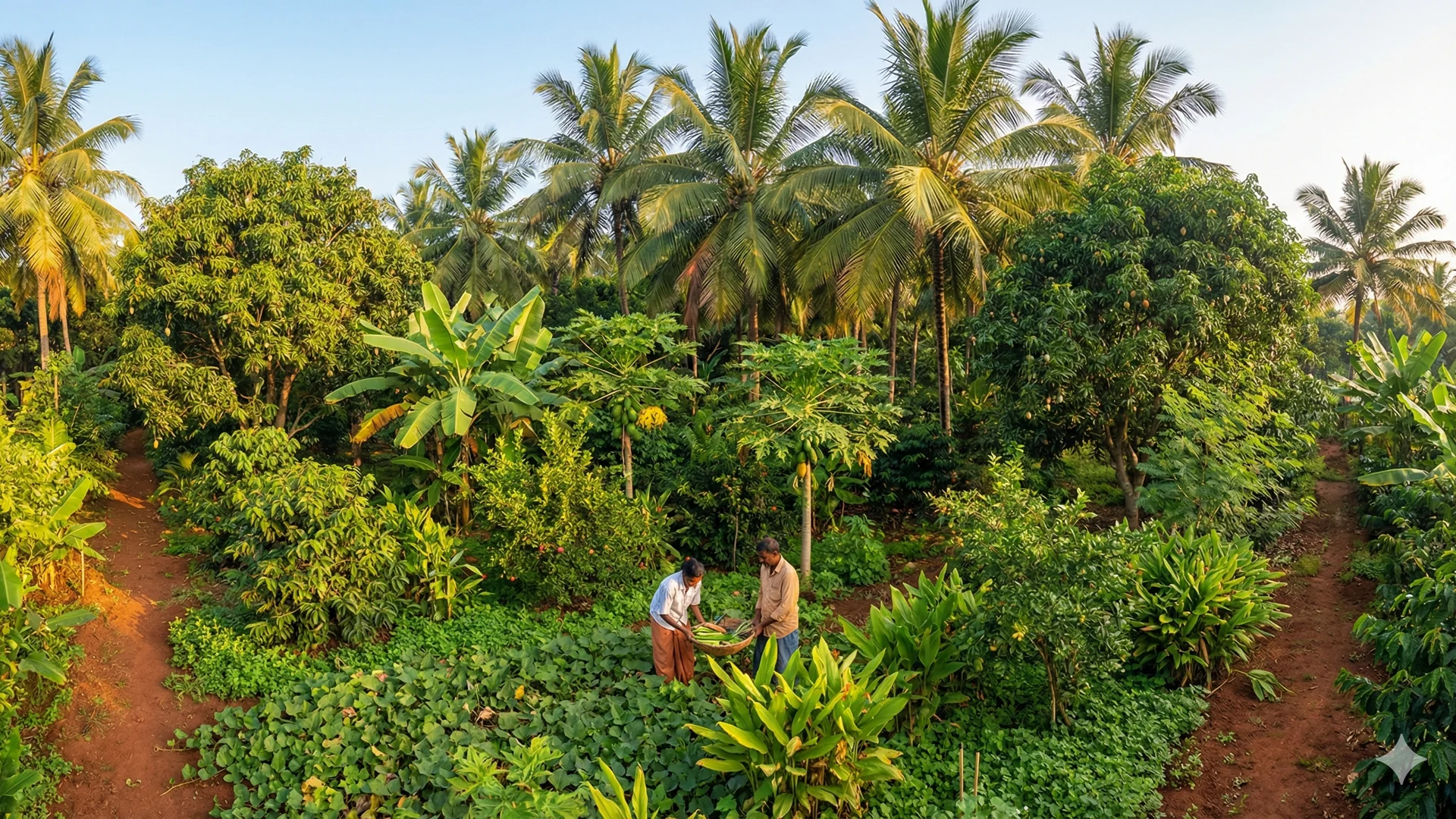
Our agronomists specialize in soil restoration. When you buy a Vriksha plot, you aren't just buying dirt; you're buying a regenerating ecosystem.
Explore Soil-Rich ProjectsThe 3 Measures of Soil Health
1. Soil Organic Matter (SOM)
SOM is the foundation of soil health. It consists of plant and animal residues at various stages of decomposition. For every 1% increase in SOM, an acre of land can hold an additional 20,000 gallons of water. In the semi-arid climate near Bangalore, this water-holding capacity is the difference between a farm that thrives during the summer and one that withers.
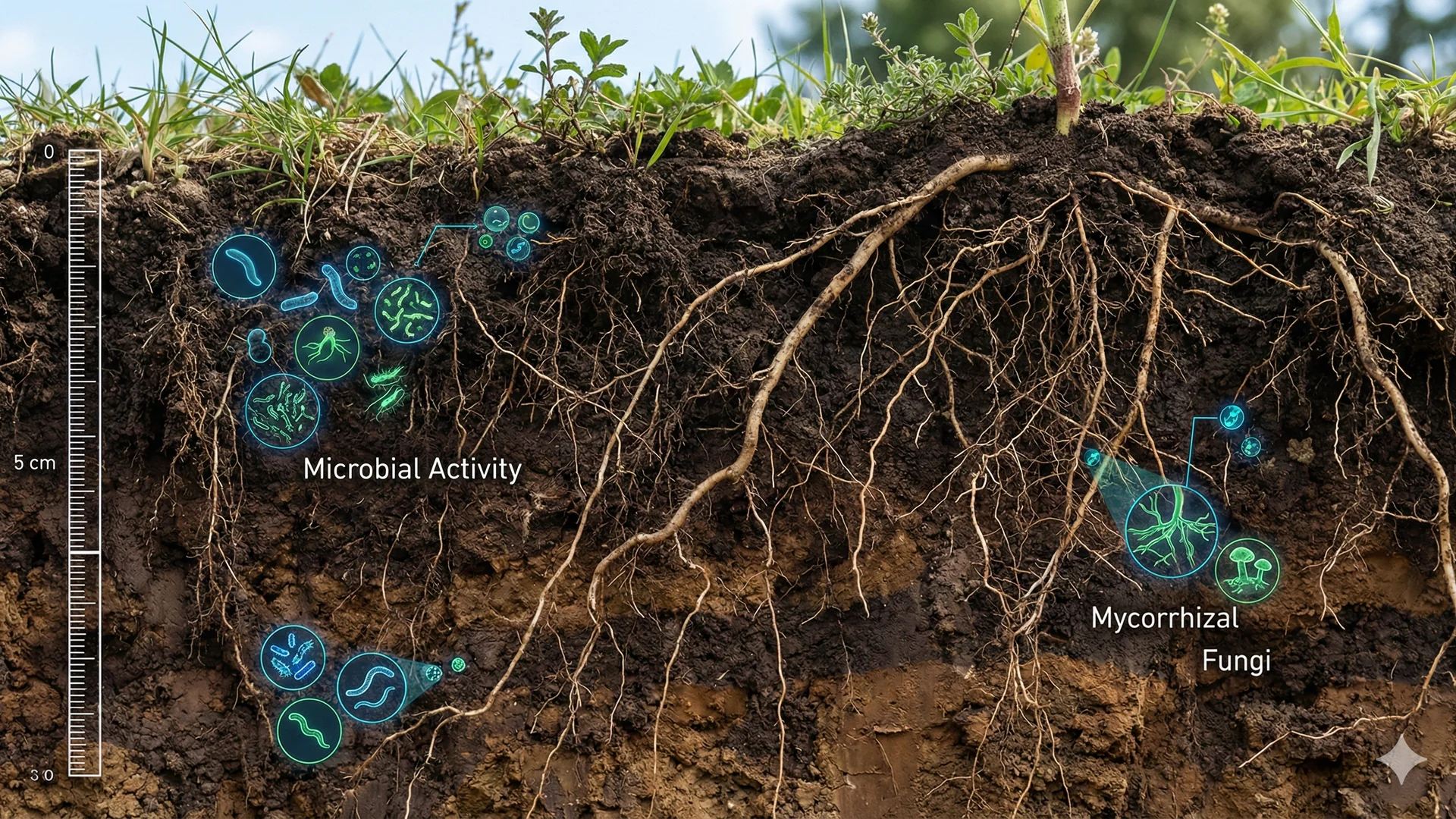
2. The Microbiome (The Invisible Workforce)
Healthy soil isn't just dirt; it's a city. Mycorrhizal fungi, beneficial bacteria, and earthworms act as a transportation network, moving nutrients from the soil into the roots of your trees. A "live" soil profile significantly reduces the need for external fertilizers, lowering your operational costs and increasing your net profit.
3. Cation Exchange Capacity (CEC)
CEC is a measure of how well the soil can hold onto essential nutrients. High-CEC soil acts like a magnet for minerals, preventing them from being washed away during the heavy Bangalore monsoons. This ensures that the trees on your managed acre have a consistent, slow-release buffet of nutrition.
How We Build Healthy Soil
At Vriksha and Wildwood, we don't just "maintain" land; we actively build it through three core practices:
- No-Till Farming: We avoid plowing, which preserves the delicate fungal networks and prevents carbon from escaping into the atmosphere.
- Diverse Cover Cropping: We plant "green manures" that fix nitrogen from the air and pump it back into the soil for your primary trees.
- Mulching at Scale: We recycle all biomass back into the earth, creating a cool, damp layer that protects the soil microbiome from the harsh midday sun.
The Economic Logic: Soil as a Financial Guardrail
Why does this matter to an urban investor? Because **buyers are getting smarter.** 10 years ago, people bought land based on a view. Today, savvy investors ask for soil test reports. As the demand for clean, organic food explodes, land that is "pre-certified" as healthy and chemical-free will command a massive premium in the resale market.
Furthermore, we are moving toward a future where "Biological Equity" will be a recognized asset class. This includes the ability of your land to sequester carbon—a metric that could eventually be monetized through carbon credits. By building a soil profile that is rich in stable carbon, you are essentially building a green revenue stream for the next generation.
Carbon Sequestration: The Invisible Benefit
Healthy soil is one of the world's most effective carbon sinks. In the context of global climate change, the ability of managed farmland near Bangalore to capture and store carbon in the ground is becoming a strategic advantage.
At One Acre Farms, we use "active" sequestration techniques—such as fungal-dominant composting and perennial cover cropping—that maximize the amount of CO2 pulled from the atmosphere and converted into liquid carbon. This doesn't just help the planet; it makes your land more drought-resistant and nutrient-dense, as detailed in our Climate-Resilient Investment Strategy.
Conclusion: Invest in the Invisible
The next time you visit your farm, take a handful of earth and smell it. If it smells like a forest floor—rich, sweet, and complex—you are looking at a high-performing asset. Soil health is the ultimate long-term play. It's an investment that deepens with every passing season.
See Our Soil in Action
We invite you to visit our project sites and see the results of our soil-building practices first-hand. Compare our "Living Earth" to conventional neighboring farms.
- For a complete overview, read our permaculture farming near Bangalore.
- The Digital Nomad'S Guide To 'Working Fr...
- Exploring Opportunities
- Discover your ideal rural escape with our compare managed farmland developers.
- Deepen your research by exploring our managed farmland near Bangalore.
Myth vs. Reality
"Red soil is the only 'good' soil for Bangalore."
"Chemical fertilizers are necessary for fast growth."
"Earthworms are just a bonus."
Interested in owning farmland?
Schedule a free site visit to explore our managed farmland projects near Bangalore.