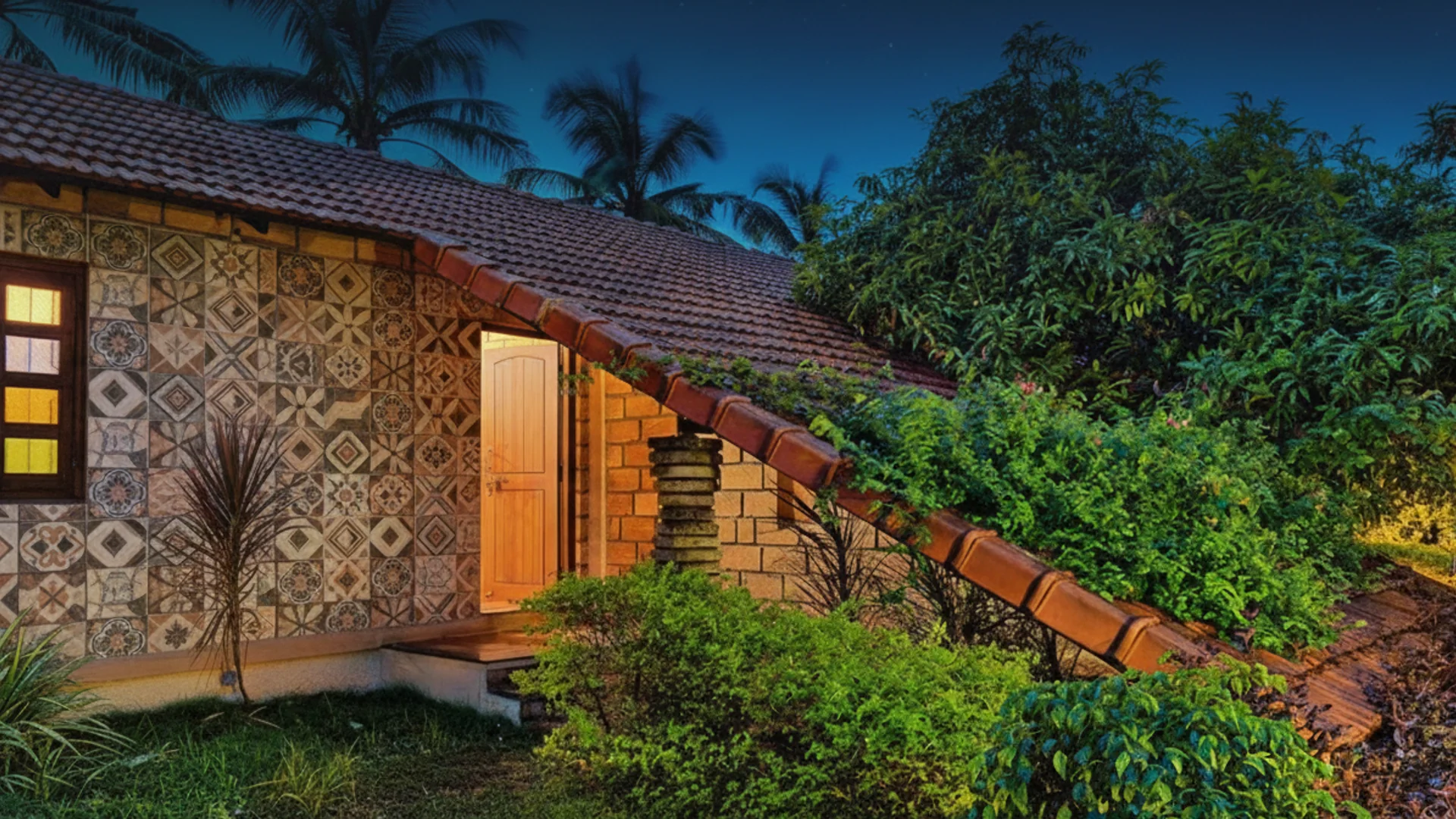
The dream of a farmhouse shouldn't be a nightmare for the environment. In the age of climate consciousness, the "Net-Zero" farmhouse has emerged as the gold standard for luxury living that gives back to the earth.
What is a Net-Zero Farmhouse?
A Net-Zero (or Zero Energy) building is one where the total amount of energy used by the building on an annual basis is equal to the amount of renewable energy created on the site. For a farmhouse near Bangalore, this isn't just a technical challenge—it's a lifestyle design opportunity. By utilizing our abundant sunlight and regional materials, we can create homes that are as comfortable as they are responsible.
The Pillars of Net-Zero Design
1. Passive Solar Architecture
Before you install a single solar panel, you must design with the sun in mind. In Bangalore's climate, this means optimizing for natural ventilation and shading. Large overhangs, strategically placed windows for cross-ventilation, and thermal mass (like thick mud-block walls) can reduce the need for artificial cooling by up to 80%.
2. The High-Performance Envelope
Insulation is the unsung hero of the net-zero home. By ensuring the roof and walls have high thermal resistance, you keep the heat out during the day and the cool in at night. Using natural materials like lime plaster or cellulose insulation provides superior breathability, preventing the "damp" feeling often found in conventional concrete structures.
Sustainable Construction Support
At Wildwood, we provide end-to-end support for constructing eco-friendly farmhouses. From choosing local materials to integrating smart solar grids.
Explore Wildwood Services3. Energy Generation: Harvest the Sun
With over 300 days of sunshine, solar energy is the obvious choice for farmhouses near Hosur and Thalli. A well-designed net-zero home typically uses a hybrid solar system—feeding excess power back into the grid during the day and drawing only what is necessary at night. Integrating lithium-ion storage ensures your farm remains powered even during local grid maintenance.
4. Water Intelligence
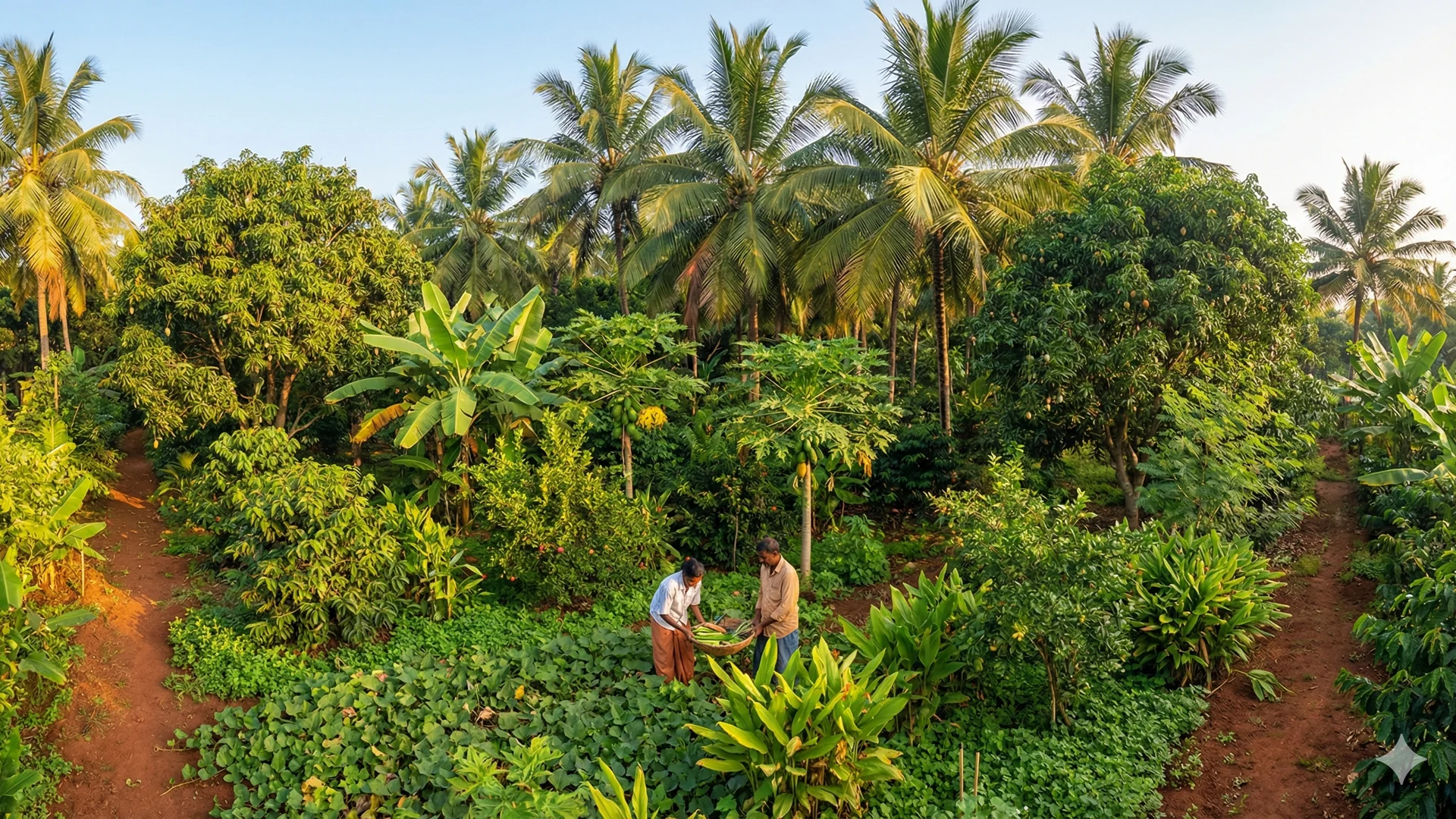
A farmhouse isn't truly net-zero if it drains local aquifers. Rainwater harvesting is non-negotiable. By treating greywater through natural "root-zone" filtration systems, you can create a circular water economy where every drop used in the house eventually nourishes the surrounding food forest.
Strategic Material Selection: The Heart of the Eco-Home
True sustainability looks at the "cradle-to-gate" impact of materials. Instead of truckloads of cement and steel from hundreds of kilometers away, we look to the land. This "low-embodied carbon" approach is what defines a truly resilient building.
- Stabilized Compressed Earth Blocks (SCEB): Stronger than conventional bricks, made primarily from the soil found right on your farm. This eliminates transport emissions and provides incredible thermal mass.
- Reclaimed Timber and Stone: Using old rafters, doors, and local granite adds character and saves trees. These materials have already "paid" their carbon debt.
- Oxide Floors and Lime Plasters: Traditional Indian techniques that are naturally antimicrobial, cool to the touch, and require zero intensive manufacturing.
The Economics of Net-Zero: Beyond Energy Bills
While the initial investment in solar arrays and high-efficiency systems might be 15-20% higher than a conventional build, lower running costs add up over the years. In a world of rising energy costs and potential grid instability, a net-zero farmhouse offers absolute utility independence.
Beyond the monthly savings, net-zero homes are seeing a significant "green premium" in the resale market. Sophisticated buyers in Bangalore are increasingly looking for homes that are future-proofed against climate change. A farmhouse that can operate indefinitely without external inputs is a much more resilient asset. To understand more about the future value of such tech-enabled assets, read our post on Smart Farm Technology.
The 'Smart' Layer: Automation for Efficiency
A net-zero home is also a smart home. IoT sensors can monitor soil moisture to prevent over-irrigation, and smart thermostats can adjust ceiling fans based on humidity and occupancy. This synergy between nature and technology ensures the home remains in its "energy-neutral" sweet spot. We implement these systems extensively at Vriksha Farms to ensure maximum efficiency for our residents.
Future-Proofing Your Investment
By building a net-zero home today, you are essentially buying an insurance policy against the future. As carbon taxes and stricter environmental regulations eventually become the norm in India, properties that were built with sustainability at their core will be exempt from the costly retrofitting that conventional homes will require.
This is the "Legacy" aspect of our design philosophy. We build homes that will not only look beautiful in 50 years but will also function perfectly in a significantly different climatic future. For those interested in how these homes integrate with the wider farm ecosystem, our guide on Climate-Resilient Investment offers further insights.
Conclusion: The Future of the Farmhouse
Building a net-zero farmhouse is a gift to your future self. It removes the burden of rising utility costs and provides a sanctuary that is truly in harmony with its surroundings. It is the ultimate expression of living in harmony with the Earth, where luxury and responsibility coexist perfectly.
Ready to Build Sustainably?
Whether you are just starting your design journey or have a full blueprint, our team can help you optimize your farmhouse for net-zero performance.
Explore More Farm Opportunities
- For a complete overview, read our managed farmland around Bangalore.
- The Digital Nomad'S Guide To 'Working Fr...
- Discover your ideal rural escape with our Guntas to Acres converter.
- Deepen your research by exploring our invest in one-acre farms.
Myth vs. Reality
"Net-Zero homes are ugly and look like experiments."
"It costs 2x more to build a net-zero home."
"Solar doesn't work well during the monsoon."
Interested in owning farmland?
Schedule a free site visit to explore our managed farmland projects near Bangalore.