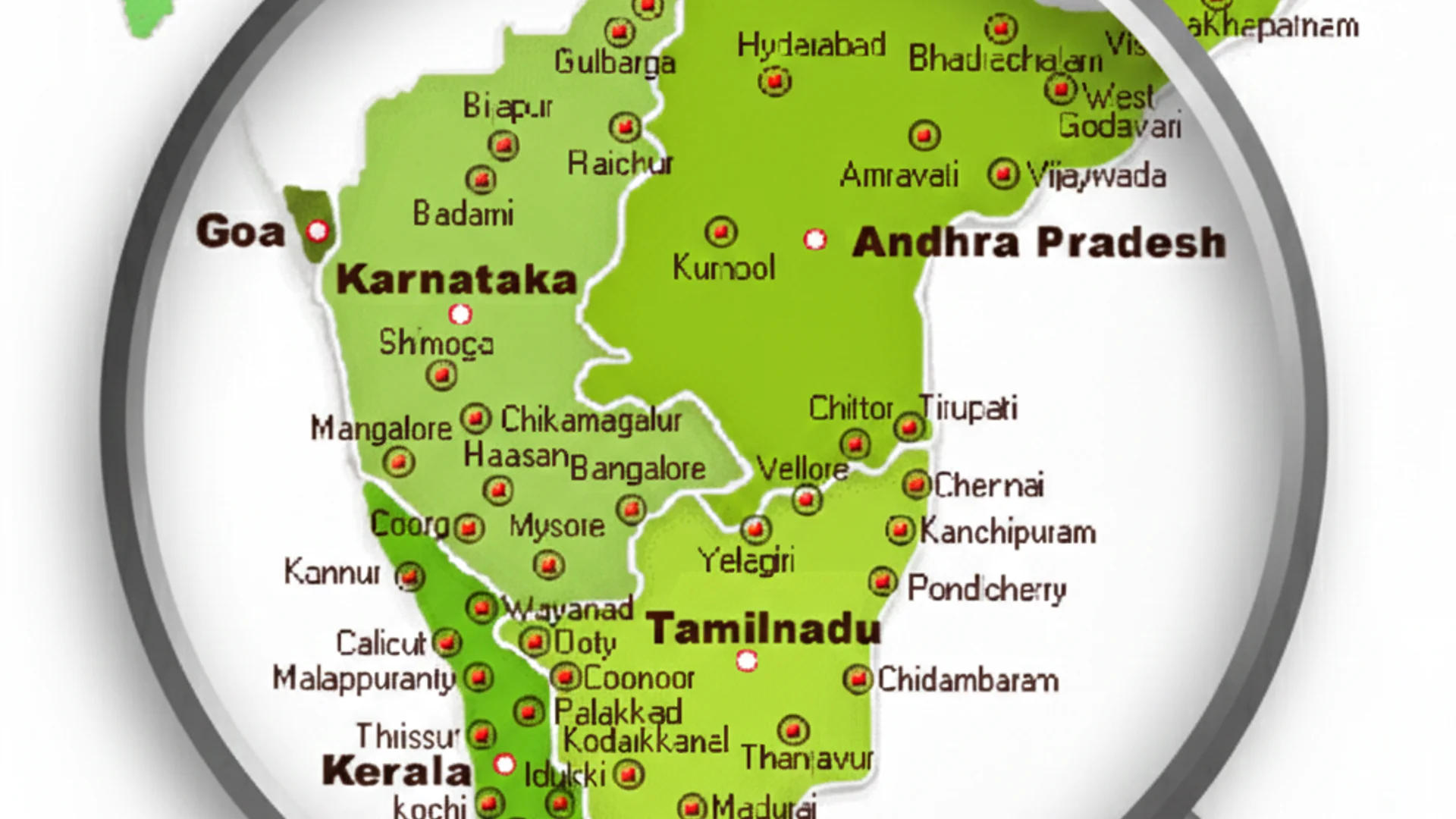
You have USD 150,000 in a NRE account. Your parents live in Bangalore. You want a piece of land that appreciates AND produces income — something tangible, something Indian, something you can visit twice a year. The problem: you are an NRI. The rules are different.
This guide covers everything an NRI needs to know before buying agricultural land in Karnataka or Tamil Nadu. FEMA restrictions, ownership structures, Power of Attorney mechanics, TDS on sales, capital gains calculations, and income repatriation — all in one place. This is the information we have given to NRI families from five countries over 10+ years of operations, updated for 2026 RBI and FEMA rules.
If at any point this feels overwhelming — it is a genuinely complex process — skip to the FAQ section or message us on WhatsApp. We work with FEMA-specialist lawyers and can connect you to someone who has helped dozens of NRI families do this correctly.
Key Takeaways
- 1. NRIs and OCIs cannot directly purchase agricultural land in India under FEMA — but inheritance and resident family member structures are legally viable
- 2. A farmland-specific Power of Attorney (not a general POA) is required for purchase execution by a resident Indian on the NRI's behalf
- 3. TDS at 20% (LTCG) or 30% (STCG) applies when an NRI sells farmland — indexation benefits reduce gains on inherited property
- 4. Agricultural income is tax-free under Section 10(1), but repatriation follows standard NRI banking norms — not LRS
- 5. Tamil Nadu projects (OAF primary corridor) have no non-agriculturist restrictions — ownership simplicity for resident family co-owners
- 6. For Bangalore IT professionals exploring this as a wealth-building strategy, see our managed farmland guide for IT professionals
FEMA Compliance: The Starting Point for Every NRI
The Foreign Exchange Management Act (FEMA), 1999, and the RBI's consolidated Foreign Exchange Inbound Investment Manual govern what NRIs can and cannot own in India. Agricultural land, plantation property, and farmhouses are specifically restricted. This is not a loophole — it is explicitly written into FEMA. Before exploring any other structure, understand this rule.
The Reserve Bank of India (RBI) has clarified in multiple circulars (most recently A.P. (DIR Series) Circular 63 dated March 26, 2003 and subsequent FEMA notifications): NRIs cannot acquire agricultural land in India. However, inherited property and property where the NRI becomes a resident Indian are treated differently. All information in this guide is for educational purposes — consult a FEMA-specialist lawyer before making any purchase decision.
1. Can NRIs and OCIs Buy Agricultural Land in India?
The short answer: Not directly. Under FEMA and the RBI's consolidated FDI Policy, Non-Resident Indians (NRIs) and Overseas Citizens of India (OCIs) are prohibited from purchasing agricultural land, plantation property (including tea and coffee plantations), and farmhouses in India.
This restriction covers:
- Non-Resident Indian (NRI): An Indian citizen who is not resident in India (stays abroad for employment, business, or any other purpose indicating intention to stay abroad)
- Overseas Citizen of India (OCI): A person holding a valid OCI card issued under the Citizenship Act, 1955
- Person of Indian Origin (PIO): Citizens of specified countries who at any time held Indian passports, or whose parents/grandparents were Indian citizens — also subject to similar restrictions
The restrictions apply to the entity that appears on the title — whether an individual, a Hindu Undivided Family (HUF), or a company. If an NRI is a shareholder in a private limited company that owns agricultural land, FEMA scrutiny applies to the company's shareholding structure as well.
What NRIs CAN do: Inherit agricultural land (no restriction on receiving inherited property), purchase land if they return to India and become resident (subject to subsequent restrictions if they re-become NRI), hold land through a resident Indian close family member with proper documentation, or invest in agricultural land through government-approved channels such as agricultural mutual funds or the agriculture infrastructure fund.
2. Ownership Structures for NRI Farmland Investment
Since NRIs cannot directly own agricultural land, there are several legal structures that NRI families use. Each has trade-offs in terms of control, tax efficiency, and risk distribution.
2a. Resident Family Member as Title Holder (Most Common)
The most straightforward approach is to hold the land in the name of a resident Indian family member — typically a parent, sibling, or spouse. The NRI provides the funds; the resident family member appears on the title and handles registration.
Key requirements: The resident holder must have a clear understanding of their fiduciary duty to the NRI family. Proper documentation — including an undertaking from the resident holder, a family agreement or MoU specifying beneficial ownership, and ideally a registered Declaration of Trust — is essential. Without this paperwork, the resident holder is legally the owner and could create complications for the NRI family.
Risk: If the resident holder faces legal disputes, divorce proceedings, or debt recovery actions, the agricultural land could be attached. Protect against this with proper legal documentation from the outset.
2b. Trust Structure for NRI Families
A properly drafted trust — usually a private family trust — can hold agricultural land. The NRI beneficiaries do not appear on the title; the trustees (who are resident Indians) hold the land on behalf of the trust's beneficiaries.
The trust deed must specifically authorize the acquisition and retention of agricultural land. The beneficiaries (NRIs) receive income from the trust and benefit from appreciation, but they do not directly own the land. FEMA specialists generally view this structure favourably — though it is the most expensive option (₹50,000–₹2,00,000 in legal fees for trust creation and registration).
2c. Partnership or LLP with NRI Partners
An LLP (Limited Liability Partnership) or partnership firm can, in principle, hold agricultural land if the NRI partner's shareholding and profit-sharing arrangement meets FEMA conditions. However, this structure is complex — the RBI and FEMA guidelines have been interpreted differently by different legal experts, and there are conflicting High Court rulings on this. Avoid this structure unless your FEMA lawyer explicitly recommends it for your specific situation.
2d. Hindu Undivided Family (HUF)
An HUF is a traditional family structure recognized under Indian law. If the Karta (head) of the HUF is a resident Indian, and the NRI is a member (not the Karta), the HUF can hold agricultural land in certain interpretations of FEMA. However, FEMA clarity on HUF structures with NRI members remains ambiguous. This structure has been used historically but is less commonly recommended today due to ambiguity.
3. The Power of Attorney (POA) Process for Remote Purchase
One of the most practical questions NRIs ask: "I cannot come to India just for registration. Can someone sign on my behalf?" Yes — through a Power of Attorney (POA). Here is how it works in practice.
Step 1: Execute the POA
The NRI executes a POA in favour of a resident Indian (usually a family member or a lawyer). This can be done:
- In India: Before a notary and optionally registered with the Sub-Registrar. This is the cleanest option — registered POA has highest evidentiary value.
- At an Indian Embassy/Consulate: Indian missions abroad can attest POA documents. The NRI signs in front of the consular officer, who verifies identity and attest the signature.
- Through Apostille: For countries that are parties to the Hague Convention, an apostille stamp on the POA can make it valid in India without embassy attestation.
Step 2: POA Must Be Specific for Farmland
A "general POA" (which covers all financial and legal matters) is not sufficient for farmland registration in Karnataka or Tamil Nadu. The Sub-Registrar will scrutinize the document. The POA must explicitly state:
- Authority to purchase agricultural land in the specific state (Karnataka or Tamil Nadu)
- Authority to sign the Sale Deed (Ayadi Chalane or Rogistration Pathiram in Tamil, or the equivalent Karnataka document)
- Authority to appear before the Sub-Registrar and SRO (Sub-Registrar Office)
- Authority to collect original documents (Patta, RTC, EC, title deeds) after registration
- Authority to open and operate a bank account for the transaction (if required)
Step 3: Registration
On the day of registration, the POA holder appears before the Sub-Registrar with the original POA document, the sale deed, identity proofs, and the prescribed registration fees. The POA holder signs the deed on behalf of the NRI principal. The NRI does not need to be physically present.
Step 4: Post-Registration
After registration, the POA holder collects the original registered document, updates the land records (Khatha transfer in Karnataka, Patta transfer in Tamil Nadu), and ensures the NRI's beneficial interest is documented through a family agreement or undertaking. This step is critical — the registration alone is not sufficient protection for the NRI without accompanying documentation.
4. Income Repatriation Rules for NRI Farmland Owners
Two types of income flow from agricultural land: rental/lease income from agricultural operations, and capital appreciation when the land is sold. The repatriation rules differ for each.
Agricultural Income Repatriation
Agricultural income earned in India by an NRI is generally exempt from Income Tax under Section 10(1) of the Income Tax Act, 1961. This is a significant benefit — unlike rental income from commercial property (which is fully taxable), agricultural income from land in India is tax-free regardless of the owner's residential status.
Repatriation process: The resident Indian who holds the title (or the trust trustees) can remit agricultural income to the NRI's NRE/FCNR account through normal banking channels. Banks typically require supporting documents: agricultural income certificates from the local taluk office, tenant agreements if the land is leased, and Form 15CB (for foreign remittances above certain thresholds, confirming the nature of income).
The RBI's Liberalised Remittance Scheme (LRS) — which allows Indian residents to remit up to USD 250,000 per financial year abroad — does not directly apply to agricultural income. However, for substantial remittances, the bank may seek additional documentation. Working with a banker who understands NRI agricultural income repatriation is important.
Sale Proceeds Repatriation
When agricultural land held by a resident Indian (on behalf of NRI family) is sold, the sale proceeds are received by the resident holder. Repatriating these proceeds abroad requires:
- Completion of applicable capital gains tax payment (TDS deduction at source by the buyer — see Section 5)
- Filing of Income Tax Return (ITR) by the resident seller to claim indexation benefits and reduce capital gains liability
- An e-FTRS (Electronic Foreign Remittance Transaction) form filed by the bank for amounts above the reporting threshold
- Certification from a Chartered Accountant confirming the source of funds and tax compliance
The proceeds must flow through the NRO (Non-Resident Ordinary) account before partial repatriation. Not the entire sale amount is repatriable — the resident seller can only remit the amount after paying capital gains tax. Work with a CA who specializes in NRI taxation from the day of purchase, not just at the time of sale.
5. TDS and Capital Gains Tax for NRI Farmland Sellers
Whether you are the NRI beneficiary of a resident-held land sale or you are a resident seller who inherited land from an NRI parent, the TDS and capital gains framework is the same. Understanding this from the beginning affects your purchase decision and your holding period strategy.
TDS on NRI Property Sales (Section 195)
When an NRI sells property in India, the buyer is legally required to deduct TDS (Tax Deducted at Source) before making the payment. The TDS rates are:
- Long-term capital gains (land held for more than 2 years): 20% TDS with indexation benefit
- Short-term capital gains (land held for 2 years or less): 30% TDS at slab rate
For example: If a property purchased 8 years ago for ₹30L is sold for ₹80L, the long-term capital gain is ₹50L. With indexation (using Cost Inflation Index), the indexed cost might be ₹50L or more, significantly reducing or even eliminating the taxable gain. This is why maintaining purchase records is critical.
Lower TDS Certificate (Form 13)
If the seller believes their taxable capital gains will be lower than the standard 20% (due to indexation benefits, reinvestment under Section 54, or other exemptions), they can apply to the Income Tax Department for a Lower TDS Certificate (Form 13). This certificate instructs the buyer to deduct a lower percentage.
The process takes 2–6 weeks and requires a CA to compute the expected capital gains and file the application. Getting this certificate before initiating the sale process is one of the most valuable things an NRI seller can do — it means more money in hand at the time of sale.
Agricultural Income Tax Exemption (Section 10(1))
Note: The Section 10(1) agricultural income tax exemption applies to the income earned from agricultural operations — not to capital gains on the sale of land. The sale of agricultural land is treated as a capital asset, and capital gains tax applies to any appreciation. The agricultural income exemption does not apply to capital gains.
Tax Disclaimer
Agricultural income is exempt from Income Tax under Section 10(1) of the Income Tax Act, 1961. Capital gains on the sale of agricultural land are subject to TDS and capital gains tax as described above. This is not financial or tax advice — consult a Chartered Accountant for your specific situation.
6. Karnataka vs. Tamil Nadu for NRI Farmland Investment
Both Karnataka and Tamil Nadu have attracted NRI farmland investment, but the legal landscape differs significantly — especially relevant for NRI buyers who are already navigating complex ownership structures.
Karnataka: Repeal of Sections 79A/79B (2020)
Karnataka's Land Reforms Act Sections 79A and 79B — which restricted non-agriculturists from buying farmland — were repealed in 2020. This means any Indian citizen, regardless of profession or income source, can now purchase agricultural land in Karnataka. For NRIs holding land through a resident family member, this is the same situation as before (the restriction was always on the NRI directly, not on their resident representative). The 2020 change makes Karnataka cleaner for resident Indian buyers and does not change the NRI-specific FEMA restrictions.
Karnataka's key documents: RTC (Record of Rights, Tenancy and Crop Information), Pahani (field map and classification), Akarband/Tippan (survey sketch), 15-year Encumbrance Certificate from the local SRO.
Tamil Nadu: No Non-Agriculturist Restrictions
Tamil Nadu has never had restrictions on non-agriculturists purchasing agricultural land. The state's land laws under the Tamil Nadu Land Reforms Act are relatively straightforward — the ceiling limit of 15 Standard Acres applies, but most 1-acre buyers are unaffected. This makes the legal verification process simpler for our managed farmland projects in Thalli, Tamil Nadu.
Tamil Nadu's key documents: Patta (ownership record), Chitta (land extent), Adangal (cultivation history), 30-year Encumbrance Certificate from the Sub-Registrar's office. The 30-year EC period for TN is longer than the 15-year standard for urban property — a point many buyers miss.
Which State is Better for NRI Investment?
From a pure FEMA standpoint, both states are equivalent for NRI investors (neither allows direct NRI purchase). From a practical standpoint, Tamil Nadu's projects near Thalli — including The One Acre Farms' completed projects (Hilltop, Lakeside, Country Side, Misty Valley) — offer a 10+ year track record of managing farmland investment for NRI families from the UAE, USA, UK, Singapore, and Australia. The ownership structure (resident Indian family member as title holder) is simpler when the underlying land has clean TN documentation, which is why we primarily operate there.
7. How The One Acre Farms Has Helped NRI Families
Over 10+ years and 130+ co-farmer families, we have worked with NRIs from five countries. Here is what that looks like in practice.
What We Have Seen Work
- Parent-child structure: NRI funds the purchase; resident parent is on the title. Works well when the parent is the Karta of a joint family and there is clear documentation of the NRI's beneficial interest.
- Spouse-held title: The NRI's resident spouse (Indian citizen, resident) holds the title. Simple, low risk, widely accepted by banks and government offices.
- Trust structure: Used for larger investments (₹50L+) where the NRI wants formal separation between title and beneficial ownership. Higher legal cost upfront, but cleaner long-term.
Common Mistakes We Have Helped Correct
- No family agreement: Land bought by resident parent with NRI funds, with no documentation of the NRI's interest. When the parent passed away intestate, the NRI had no legal claim. We now always recommend a registered family agreement.
- Wrong POA scope: NRI executed a general POA before a consular officer, which was rejected at the SRO because it did not specifically mention agricultural land transactions. Re-executing cost 3 months and another trip to the embassy.
- No TDS planning: NRI beneficiary of a sale did not file for a lower TDS certificate. 20% was deducted from a sale where indexation reduced the taxable gain to nearly zero — ₹8L unnecessarily withheld by the buyer.
Our NRI Support Services
For every NRI family we work with, we provide:
- Referral to FEMA-specialist lawyers we have worked with for 8+ years (not general practice lawyers — specialists)
- POA execution assistance — coordinating with the Indian embassy or assisting with in-India execution
- Full legal due diligence (30-year EC, Patta/RTC verification, Panchami/SC land check in Tamil Nadu)
- Family agreement drafting and registration support
- Post-purchase documentation — Khatha/Patta transfer, tax compliance coordination with CA
- WhatsApp support in India and abroad — our team is reachable across time zones
Past performance is not a guarantee of future returns. All appreciation figures from completed projects (Hilltop ~230%, Lakeside ~220%, Country Side ~200%, Misty Valley ~75–150%) are based on historical data.
Explore Related Resources
Explore More Farm Opportunities
Myth vs. Reality
"FEMA is so restrictive that NRIs cannot have any farmland in India."
"A general Power of Attorney is sufficient to purchase farmland in India."
"Agricultural land income is tax-free and can be fully repatriated under LRS."
Disclaimer: Land laws and regulations vary significantly between states (Karnataka vs. Tamil Nadu) and are subject to frequent amendments. This guide is for informational purposes only and does not constitute legal advice. Always perform independent due diligence through a qualified advocate.
Frequently Asked Questions
Interested in owning farmland?
Schedule a free site visit to explore our managed farmland projects near Bangalore.