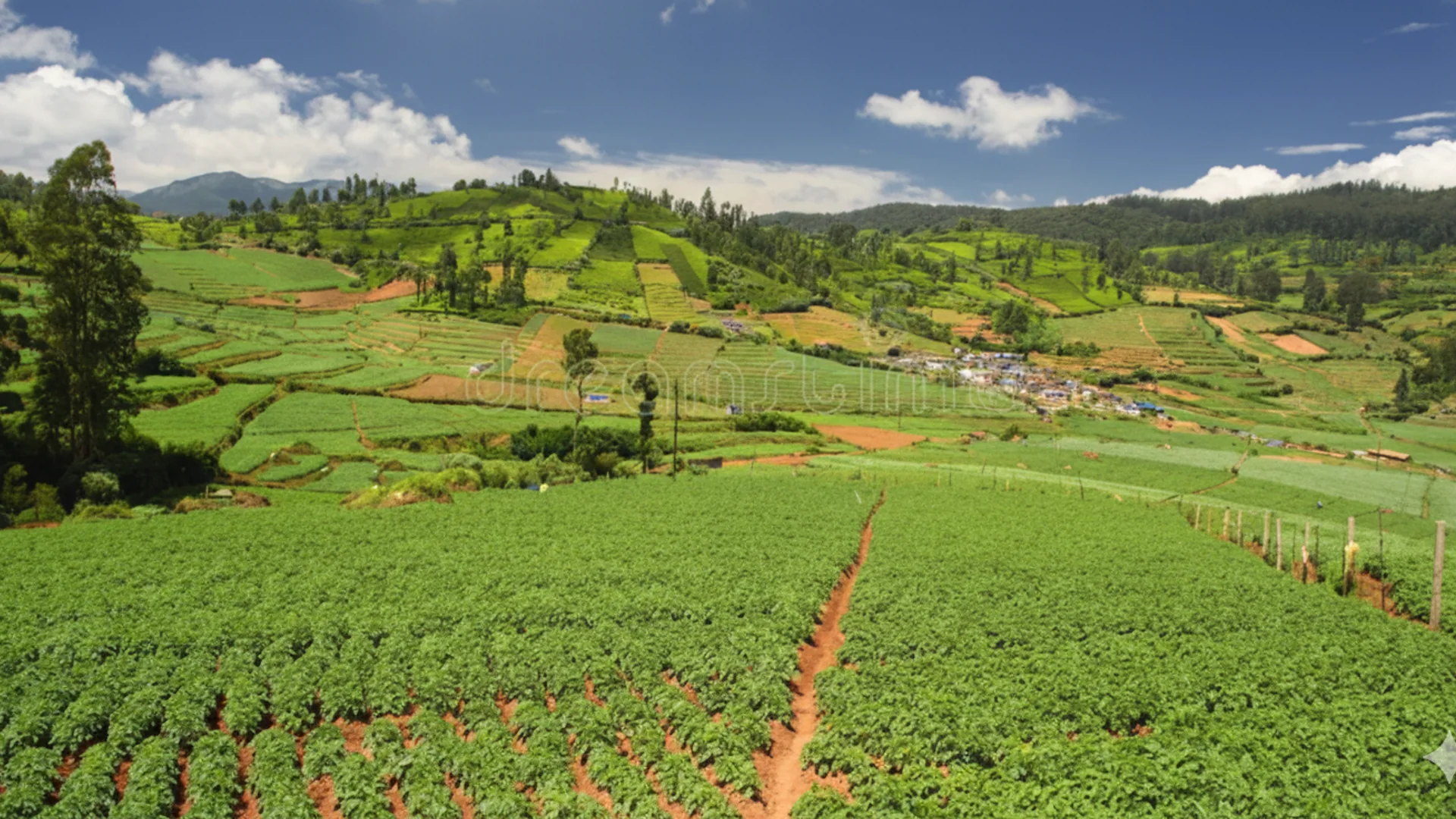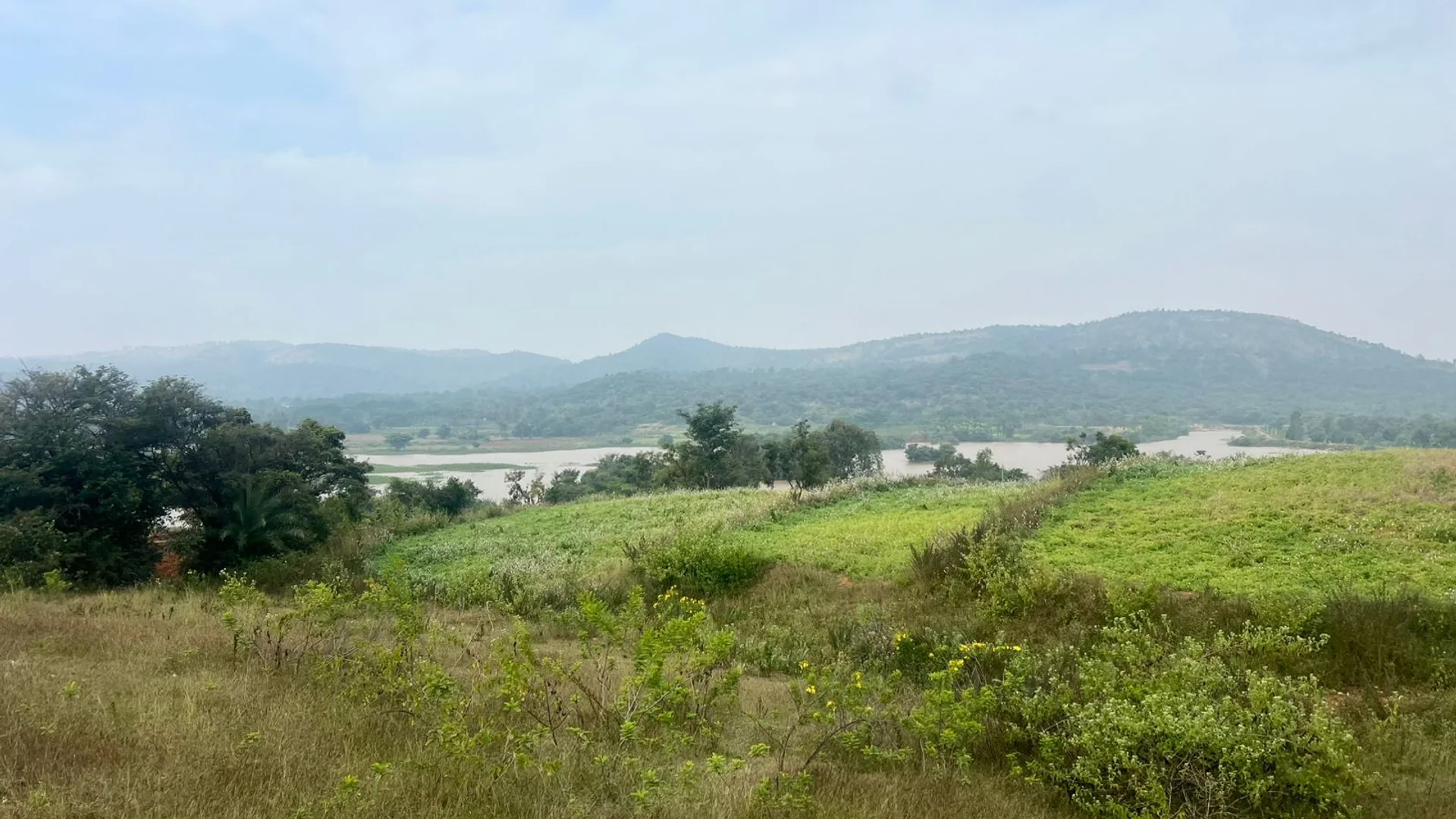
Drive 80km south of Bangalore on NH7 and the city noise fades. The temperature drops two or three degrees. The landscape shifts from dry plains to rolling hills covered in mango groves, eucalyptus plantations, and the occasional tea estate. Welcome to the Thalli-Hosur corridor — South India's most compelling managed farmland investment destination that most Bangalore investors have only just begun to discover.
Explore Our Thalli-Hosur Projects
One Acre Farms has sold four projects in the Thalli-Hosur corridor since 2019 — all now sold out. A new project in Thalli is currently on waitlist.
View Thalli-Hosur ProjectsKey Takeaways
- 1. Thalli-Hosur corridor (Tamil Nadu) is 80km from Bangalore via NH7, at 900m elevation — 5–8°C cooler than Bangalore year-round
- 2. Current One Acre Farms managed farmland in the South corridor (Thalli and Kanakapura) starts from ₹25L / ₹250 per sq.ft. Check plot size and project-specific pricing.
- 3. All four completed OAF projects are in Thalli (launched 2019–2021, all sold out)
- 4. NH7 widening, STRR orbital, and Hosur SIPCOT electronics corridor are the key infrastructure drivers through 2026–2030
- 5. Eligibility depends on your situation; our team walks you through it on a call
Geography: Where the Corridor Is and Why It Matters
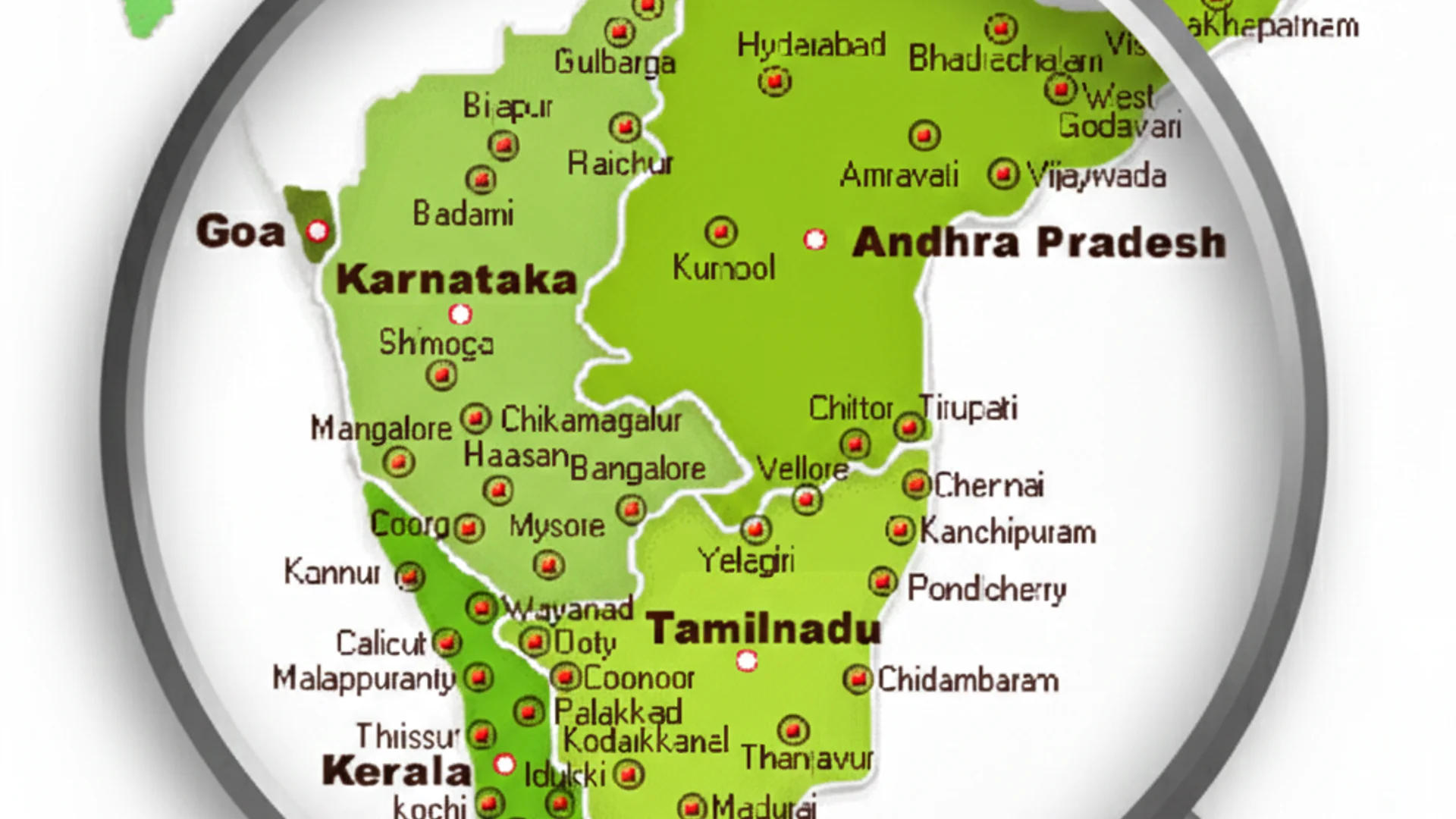
The Thalli-Hosur corridor spans Krishnagiri District in Tamil Nadu, running along NH7 from Bangalore's southern city limit through Hosur towards Krishnagiri town. Thalli town itself sits at approximately 900 metres (3,000 feet) elevation — significantly higher than Bangalore's 920m — and this elevation is the first key differentiator. Higher elevation translates to cooler average temperatures year-round: 5–8°C lower than Bangalore in summer months, and 3–5°C cooler nights throughout the year.
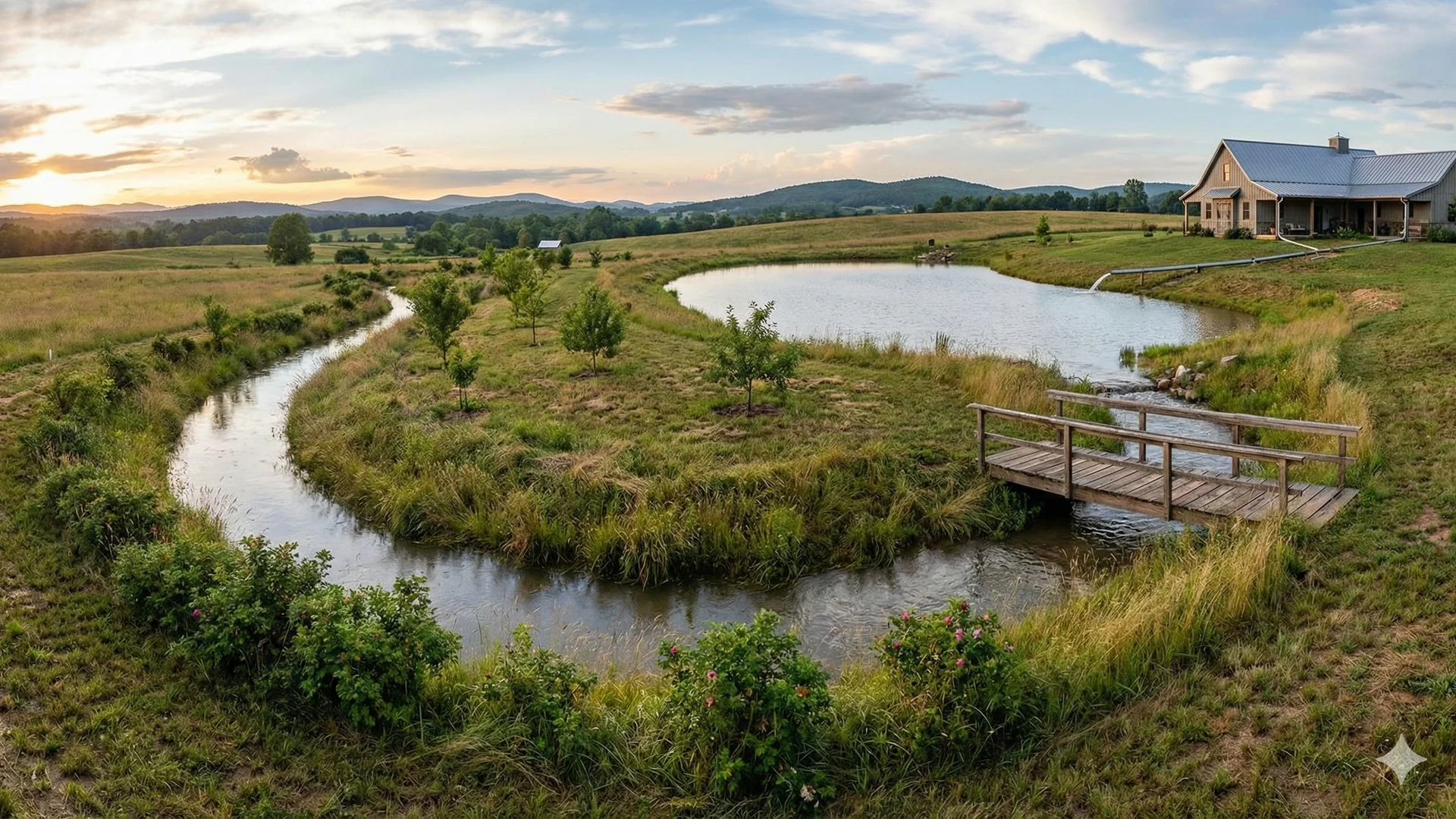
This is the same reason the British chose this region for their hill stations, and why it earned the local moniker "Little England." Unlike the flat, semi-arid plains that dominate much of Karnataka's farmland near Bangalore, the Thalli-Denkanikottai landscape features rolling hills, shallow valleys, and reservoir systems, including the Madeswaram reservoir, that provide reliable surface water for agriculture even during dry seasons.
The corridor sits within the Cauvery Basin, meaning groundwater tables in the area are relatively stable compared to the hard rock zones of North Bangalore. Our own project experience since 2019 confirms this: borewells in Hilltop and Lakeside projects have maintained water levels even in below-average monsoon years.
Why Elevation Matters for Farm Productivity and Lifestyle
Elevation is not just a lifestyle factor — it directly affects agricultural output. The cooler night temperatures in the Thalli region (especially November through February) trigger excellent flowering in fruit trees, particularly Alphonso mango and teak. This is why the region produces over a million roses daily for domestic and export markets. The same climate that benefits rose cultivation benefits high-value timber and fruit tree growth.
For the farmland investor, this translates to tangible agricultural productivity. In Thalli's cooler climate, crop stress days (days above 35°C that damage flowering and fruit set) are significantly fewer than in the hotter Kanakapura or Dabaspet corridors. Managed farms in Thalli have recorded 20–30% higher mango yields per tree compared to comparable farms at lower elevation near Bangalore.
For the lifestyle investor, the elevation advantage is immediately felt. Weekend visits are genuinely pleasant even in May and June — the months when Bangalore's peripheral farmland feels like a furnace. This practical comfort factor matters: investors who enjoy their farm visit more often are investors who refer their friends.
Infrastructure Trajectory: What's Changing and When
The Thalli-Hosur corridor is seeing simultaneous investment across three infrastructure vectors that rarely align in the same corridor.
NH7 and the Bangalore–Hosur Expressway
NH7 is being progressively widened to a 10-lane expressway between Bangalore and Hosur. This is not a future plan — significant stretches are already 8 lanes with grade-separated intersections. The reduction in travel time from Electronic City to Hosur (and by extension, Thalli) is already measurable. Once complete, the 80km Thalli drive from central Bangalore will be under 90 minutes in normal traffic.
Hosur Industrial Corridor: SIPCOT, Electronics, and EV Manufacturing
The Hosur SIPCOT (State Industries Promotion Corporation of Tamil Nadu) industrial park has attracted major electronics and EV component manufacturers over the past five years. Key developments include:
- Multiple Tier-1 and Tier-2 suppliers for Toyota's Bangalore and Chennai plants setting up facilities in Hosur-Krishnagiri
- Electronics manufacturing corridor growth attracting Samsung, Pegatron, and component suppliers
- New cold storage and cold chain infrastructure for agricultural exports — built on the back of industrial logistics investment
- Proposed peripheral ring road connecting Hosur to the proposed Hosur Railway Terminal
This industrial employment growth creates a high-income residential catchment that did not exist 10 years ago. When IT professionals and factory managers relocate to Hosur for work, their demand for high-quality residential options — including weekend farm properties — follows naturally.
Satellite Town Ring Road (STRR) and Metro Extension
The Karnataka government's proposed Satellite Town Ring Road (STRR) — a 1,290km outer orbital road around Bangalore — will create a third accessibility axis for the Thalli corridor. While the STRR primarily runs through Karnataka, its integration with NH7 south of the city will reduce the effective travel distance from North Bangalore to Thalli significantly.
Tamil Nadu's proposed metro extension from Hosur town toward the Tamil Nadu-Karnataka border is at a earlier planning stage. Even the proposal signals the state's intent to urbanise the Hosur node.
Current One Acre Farms managed farmland in the South corridor (Thalli and Kanakapura) starts from ₹25L / ₹250 per sq.ft. Plot totals depend on size and project. Compare current quotes and conduct independent due diligence.
Thalli-Hosur vs Alternatives: The Comparison That Decides the Decision
Most serious farmland investors shortlist two or three corridors before deciding. Here is how the Thalli-Hosur corridor compares to the three most commonly considered alternatives.
vs. Kanakapura (Karnataka)
Kanakapura is the more established farmland corridor. It is closer to Bangalore (40–60km), has better-known project developers, and already appears in Google search results for "farmland near Bangalore." However, it has two structural disadvantages: higher entry cost (₹30–55L per acre today) and drier conditions (lower elevation, higher summer temperatures). These factors make it less attractive for investors compared to the Thalli corridor in Tamil Nadu.
Kanakapura suits investors with a ₹50L+ budget who prioritise proximity to Bangalore above all other factors. Current One Acre Farms managed farmland in the South corridor (Thalli and Kanakapura) starts from ₹25L / ₹250 per sq.ft. Contact us to compare available plots against your budget.
vs. North Bangalore (Dabaspet, Nandi Hills approach)
North Bangalore farmland corridors have benefited from the city's northward growth trajectory. However, these areas are increasingly peri-urban — subject to conversion pressure, higher agricultural restrictions near reserved forests, and a fundamentally different farming character (cereal and fodder crops dominate, not high-value horticulture). The peri-urban dynamic means land that looks rural today may be within an urban planning zone within 5–10 years — which creates planning uncertainty for the managed farmland developer model.
The Thalli-Hosur corridor, being across the state border in Tamil Nadu, is insulated from Bangalore's urban planning jurisdiction. This is a feature, not a limitation: it means consistent agricultural zoning, lower conversion risk, and a stable regulatory environment for long-term managed farmland projects.
vs. Other South Bangalore Corridors (Anekal, Chandragupta)
Anekal and Chandragupta are closer to Bangalore (30–50km) but sit at lower elevation with more variable groundwater. They lack the elevation-driven microclimate advantage of Thalli and have seen less infrastructure investment historically.
One Acre Farms' 10-Year Track Record in the Corridor
One Acre Farms has been operating in the Thalli corridor since 2019. Our four completed (sold-out) projects in the corridor are:
- Hilltop Farm Retreat (Thalli, 2019): 28 plots. Sold out.
- Lakeside Farm Retreat (Thalli, 2021): 21 plots. Sold out.
- Country Side Farm Retreat (Thalli, 2019): 18 plots. Sold out.
- Misty Valley Farm Retreat (Thalli, 2021): 19 plots. Sold out.
These four projects are home to co-farmer families who made their decisions based on site visits, project documentation, and our team's transparent track record. Every project was managed by One Acre Farms' agronomists and operations team — meaning agricultural productivity was maintained throughout the holding period, not just at the time of sale.
The new Thalli project currently on waitlist represents our fifth project in the same corridor. Operating in one corridor since 2019 means we have deep agronomist relationships, established contractor networks, proven crop mix designs, and institutional knowledge of local land documentation — advantages that benefit every co-farmer who joins our community.
Land investment carries risks including biological, climatic, and regulatory factors.
Who Should Consider the Thalli-Hosur Corridor
The Thalli-Hosur corridor is particularly well-suited for investors who:
- Have a 5–10 year investment horizon — farmland is not a short-term asset
- Want managed operational support — they do not want to farm personally
- Are comfortable with Tamil Nadu land documentation and understand the TN legal framework (simpler than Karnataka for non-agriculturists)
- Want cooler climate lifestyle benefits — genuine weekend usability year-round
- Have a budget from ₹25L for current managed farmland in the South corridor (Thalli and Kanakapura) — with rates from ₹250 per sq.ft and plot totals depending on size and project
Visit the Corridor Before You Decide
No article replaces a site visit. We run guided project tours to the Thalli corridor every weekend — book yours to see the land, meet existing co-farmers, and understand the actual investment thesis on the ground.
Continue Your Research
- The Evolution Of Farm Communities
- Compare the two main corridors side-by-side: farmland near Hosur (Tamil Nadu) vs farmland near Kanakapura (Karnataka).
- Understand the legal framework with our Legal Guide to Farmland Purchase.
- Get the complete farmland investment picture — read our Farmland Investment Guide.
Frequently Asked Questions
Myth vs. Reality
"The Thalli-Hosur corridor is too far from Bangalore for regular weekend visits."
"Tamil Nadu has complicated land laws that make buying risky."
"The land is cheaper in Thalli because it's not as good quality."
Disclaimer: Farmland investment involves market risks, including biological and climatic factors. Please consult with a financial advisor before making significant investment decisions.
Interested in owning farmland?
Schedule a free site visit to explore our managed farmland projects near Bangalore.