You have done the maths. You have read the investment narratives. You have bookmarked three different farmland developer websites. Now the question is not whether farmland near Bangalore is a good investment — it is how to separate the legitimate operators from those who will leave you with a depreciating plot and a WhatsApp number that no longer responds.
This framework has 12 evaluation points used by serious farmland buyers before committing. Each criterion is chosen to expose weaknesses in operator quality — and when applied rigorously, the developers who score well tend to share a common set of characteristics: long operating histories, transparent documentation, real communities of farm owners, and management teams that have been through multiple crop cycles and market downturns.
This is the same framework we wish more buyers had asked us to apply to ourselves when we started. Use it with any developer you are considering — including us.
Key Takeaways
- 1. A 10+ year track record with 100+ farm owners is the single most reliable quality indicator in managed farmland
- 2. Any developer who refuses to share title documents, EC, and RTC before you pay is a red flag — walk away
- 3. A guaranteed income promise on agricultural land is a sign of a scheme, not a business
- 4. Karnataka's 79A/79B was repealed in 2020 — any developer citing it as a reason to prefer Tamil Nadu is outdated
- 5. Ask to speak with existing farm owners before buying. Legitimate developers facilitate this; schemes block it
The 12-Point Evaluation Framework
Before you attend a site visit or speak with a sales team, print this framework. Score each developer on every point. The results are usually clear within the first three or four criteria.
1. Track Record — The Non-Negotiable Foundation
Ask: How long have you operated? How many acres have you delivered? How many farm owners currently have land with you? What is your completion rate across projects — how many of your launched projects have fully handed over to farm owners?
The managed farmland sector has seen many operators enter during the 2018-2022 farmland boom and exit within 2-3 years when the model proved harder than expected. A developer with fewer than 5 years of operating history and fewer than 50 farm owners has not yet demonstrated that their model works across a full crop cycle, a land price downturn, or a leadership transition.
What to look for: 10+ years operating, 100+ farm owner families across multiple completed projects, multiple geographic corridors, and verifiable testimonials from named farm owners — not stock photography.
2. Legal Documentation Clarity
Ask: Can I review the title deed history, Encumbrance Certificate, and RTC/Pahani before I sign anything? Can your legal team walk me through the documentation with my own advocate present?
The documentation check is the most important due diligence step. Every buyer should independently verify: (1) the land is under agricultural classification, (2) there are no pending litigations or mortgages, (3) the seller has the legal right to transfer, and (4) the land falls in a Green Zone or has no conversion restrictions that would prevent agricultural use.
In Tamil Nadu, verify the Patta name, EC for 30 years, and check for any Bhoodan or government land claims. In Karnataka, verify the RTC, EC, and confirm the 79A/79B repeal status. A developer who provides complete documentation before payment — not after — is demonstrating transparency, not generosity.
3. Corridor and Location Knowledge
Ask: What is the water table depth at this site? What is the soil classification? What was the dominant crop in this village before this project? How far is the nearest functioning borewell? What is the road access like in the monsoon?
Developers who know their corridor deeply will answer these questions without hesitation. Developers who are selling land they acquired speculatively will give vague answers or redirect to project brochures. Real corridor knowledge means the management team has worked the land, not just marketed it.
4. Managed Model Transparency
Ask: What is the exact annual management fee? What does it include — planting, irrigation, labour, inputs, harvesting? What is charged separately? How has the fee changed in the last 3 years and why? Can I see the actual management contract before I buy?
The managed farmland model only works if the management relationship is clear and written. Vague promises of "professional farm management" or "full service" without a detailed scope of work should be treated with suspicion. The best operators will show you exactly what they do on the farm, in writing, with frequency and quality commitments.
5. Exit Options
Ask: If I want to sell my plot in 5 years, what are my options? Are there any transfer restrictions in the project? Does the developer charge a transfer fee? Do you have a buyback arrangement?
Some projects embed transfer restrictions in their association rules or sale agreements that make it difficult to sell. Others charge exit fees that effectively trap capital. Karnataka's 79A/79B was repealed in 2020, meaning there are no state-level restrictions on agricultural land transfer for Indian citizens in Karnataka. Tamil Nadu has no equivalent restrictions. Ask specifically about any contractual restrictions beyond state law.
6. Crop Projections — Reality vs. Marketing
Ask: What has been the actual harvest from plots managed by you over the last 3 years? Can I see real yield data? Do you show price or income projections? If so, how were they calculated? Can I visit a plot during harvest season?
Be suspicious of projections that show returns without context. A legitimate developer will give you historical yield data from existing plots, explain the variance between years, and show you the full economic model — including years when weather, pest pressure, or market prices reduced returns. Guaranteed income projections are a red flag — they are illegal for agricultural operations and indicate the developer is treating buyers as investors rather than farm owners.
Agricultural income is exempt from Income Tax under Section 10(1) of the Income Tax Act, 1961. Any discussion of tax benefits should reference this — not projected yields as tax avoidance strategies.
7. Community Infrastructure — Built vs. Planned
Ask: What is operational today — not what is planned for next year? Can I visit the community centre, the irrigation system, and existing plots without an appointment? Are there other farm owners currently on the project I can speak with?
Developers often show impressive renderings of future community infrastructure — farmhouses, clubhouses, composting facilities, farm stands. Ask specifically what exists today. Visit the project without calling ahead. The difference between a developer who has built a real community and one who is selling a future vision is immediately apparent when you arrive unannounced.
8. Registration Process
Ask: How does the registration process work? Will someone from the developer accompany me to the Sub-Registrar office? How long does registration take after payment?
Agricultural land registration in both Karnataka and Tamil Nadu is a multi-step process involving title verification, EC issuance, mutation, and registration at the Sub-Registrar office. A developer who handles the coordination — and has a legal team familiar with the process — removes significant friction.
9. Ongoing Communication Cadence
Ask: After I buy, how will I know what is happening on my farm? How often will I receive updates? Will I have a dedicated relationship manager or a WhatsApp group? Can I visit my plot whenever I want?
The test of a genuine managed farmland relationship is what happens after the sale. Ask to see sample farm updates — WhatsApp reports, seasonal activity logs, harvest summaries. Farm owners should receive updates at minimum quarterly, with photos and data from their specific plot. If the developer struggles to produce sample updates or says "we will share after you buy," that tells you everything about their post-sale communication culture.
10. Scam Signals — What to Watch For
These warning signs, individually or in combination, should cause you to stop the evaluation immediately:
- Guaranteed or fixed income promises — No one can guarantee what a farm will earn. Treat any such promise as a red flag.
- Artificial urgency — "Only 3 plots left in this phase" used as a reason to pay today. Legitimate projects have genuine waitlists for popular phases and open waitlists for upcoming phases without pressure.
- Refusal to share documentation — Any developer who requires a payment before sharing title documents is operating on a different model than transparent agricultural land sales.
- Land conversion promises — Promises that agricultural land will be converted to residential or commercial plots are illegal in Green Zone areas and fraudulent in agricultural zones. Agricultural land in both Karnataka and Tamil Nadu cannot be unilaterally converted for non-agricultural use.
- No existing farm owners to speak with — The best reference is a conversation with someone who has been a farm owner with the developer for 2+ years. If the developer cannot arrange this, that itself is the answer.
11. Ownership After Purchase
Ask: Whose name will be on the registered sale deed? What changes about the developer's role after handover? Is there an association or community governance structure?
The registered owner should be the buyer — you. Not a company, not a trust, not the developer. After registration, the developer should transition from seller to service provider. The ongoing management relationship should be governed by a separate management agreement, not embedded in the purchase agreement. If the developer owns or controls the association that governs the project, that creates a structural conflict of interest worth examining carefully.
12. References — The Ultimate Test
Ask: Can I speak with three existing farm owners who have been with you for at least 2 years? Can I visit their plots? Can I attend a community event?
A developer who has built a real community of farm owners will have people who are happy to speak with prospective buyers. A developer who sells plots without connecting buyers to existing owners is selling a product, not a community. The quality of the conversation with long-term farm owners tells you more than any brochure, website, or site visit with a sales manager.
How to Apply This Framework to The One Acre Farms
We encourage every prospective buyer to apply all 12 points to us. Here is how we score ourselves on each:
- Track record: operating since 2019 (founder in farmland since 2014), 4 completed projects in Thalli, Tamil Nadu
- Documentation: Full title, EC, and RTC verification provided before any payment is requested
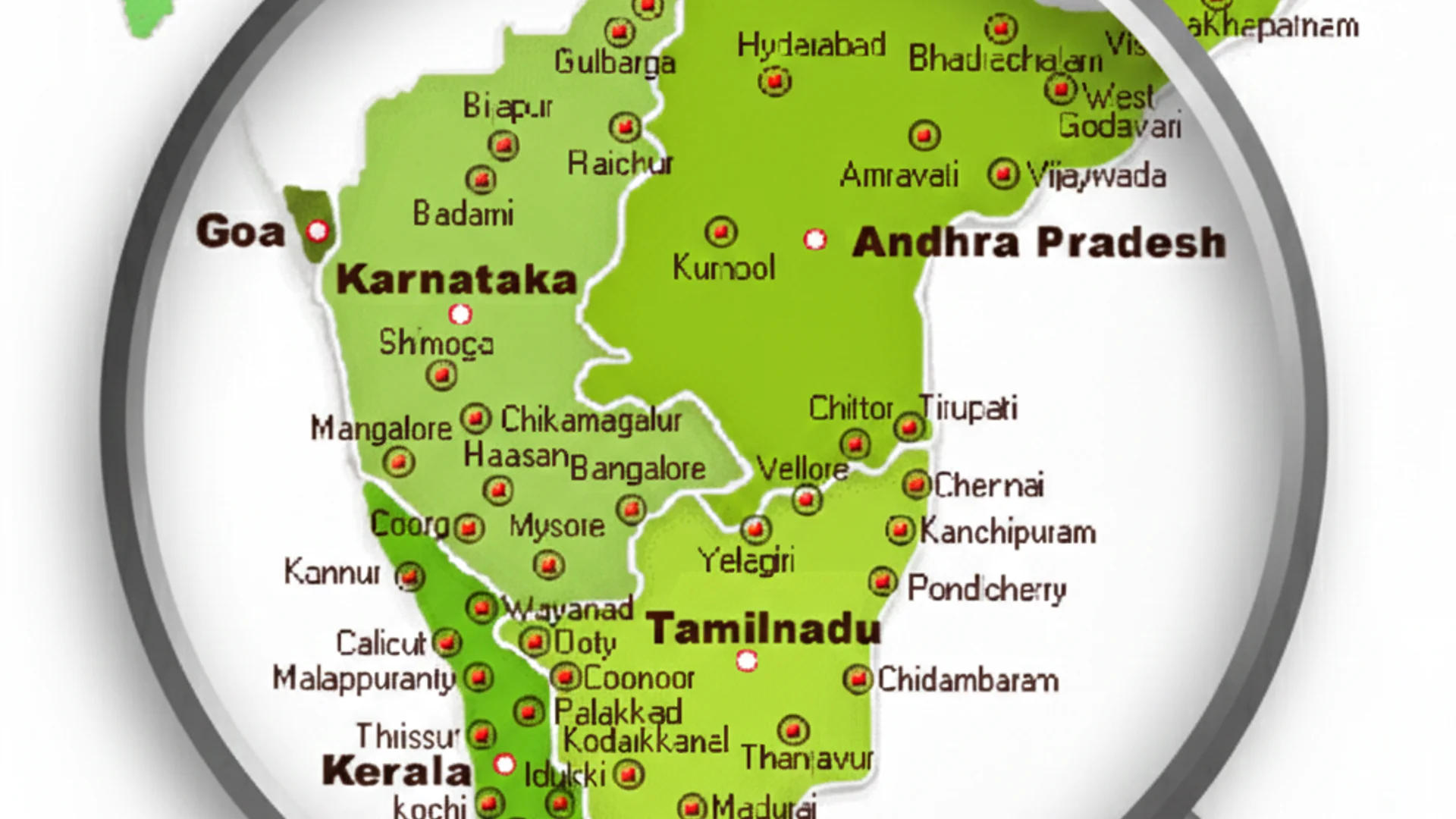
- Corridor knowledge: Three operating corridors — Thalli/Hosur, North Bangalore, Kanakapura — with documented water tables, soil types, and crop histories
- Management transparency: Written management agreement with fee scope, renewal terms, and escalation formula shared at evaluation stage
- Exit options: No transfer restrictions beyond standard state registration. Association rules available for review.
- Crop projections: Historical harvest data from each project available on request. All projections include variance ranges.
- Community infrastructure: Existing farm owner community — visit by appointment or attend a community harvest day
- Registration support: End-to-end Sub-Registrar coordination, legal advocate available
- Communication: Quarterly WhatsApp farm reports with plot-level photos, harvest data, and activity logs
- References: We arrange conversations with existing farm owners before purchase — not after
Questions to Ask on Your Site Visit
Before you leave the project site, have answers to these 10 questions:
- Can I meet a farm owner who bought here 3+ years ago? (Not a recent buyer — someone who has been through multiple crop cycles)
- Can I see your management agreement template? (The actual contract, not the brochure)
- What happens to my management fee if your company is acquired? (Tests operational continuity)
- Show me the RTC for my specific plot. (Tests that the land exists, is in the right classification, and is in your name to sell)
- What was the actual mango/sandalwood/coffee yield last season? (Real data, not projections)
- How many full-time staff are based at this project? (Shows operational investment)
- What was your last internal soil test result? (Tests ongoing agronomic management)
- Who do I call on a Sunday if there is a farm emergency? (Tests post-sale support)
- Have you ever had a dispute with a farm owner, and how was it resolved? (Tests accountability)
- Can I attend a farm owner community event before I decide? (Tests whether the community is real)
Red Flags Summary
One or more of these means stop — not slow down:
- Guaranteed or fixed returns promised in writing
- "Act now or this plot will be gone" urgency tactics
- Title documents shared only after payment
- No existing farm owners willing to speak with buyers
- Cannot produce RTC or EC for the specific plot under consideration
- Management fee described as "negotiable" or subject to change without formula
- Land conversion to residential promised or implied
- No physical management team on-site at the project
- Company registered within the last 3 years with no completed projects
- Website has no physical address, no team bios, no founding history
Next Steps for Serious Buyers
If you have applied this framework and The One Acre Farms scores well, we would welcome a conversation. We will share documentation, introduce you to existing farm owners, and answer every question before you make any commitment.
If another developer scores better on any of these 12 points — choose them. The farmland investment that is right for you is the one operated by a team with the track record, transparency, and community to back up their promises.
Browse our current projects across Tamil Nadu and Karnataka corridors. Read farm owner stories from people who applied this same framework before buying. Or message us on WhatsApp to start a conversation with no commitment.
Continue Your Research
- Managed Farmland for Sale Near Bangalore — Current projects with pricing and availability
- Farmland Buying Legal Guide — Documentation requirements, registration process, and legal checklist
- Farmland Due Diligence Checklist — Step-by-step verification before purchase
- Farm Owner Stories — Real experiences from families who evaluated, bought, and are now co-farming
- permaculture farming practices
- eco farm communities near Bangalore
- best farmland locations near Bangalore
Frequently Asked Questions
Continue Your Research
- Managed vs Regular Farmland — Key criteria for evaluating farmland developers
- Farmland Investment Guide — Complete checklist for evaluating farmland projects
- View Available Farmland Near Bangalore — Currently open for investment
Interested in owning farmland?
Schedule a free site visit to explore our managed farmland projects near Bangalore.