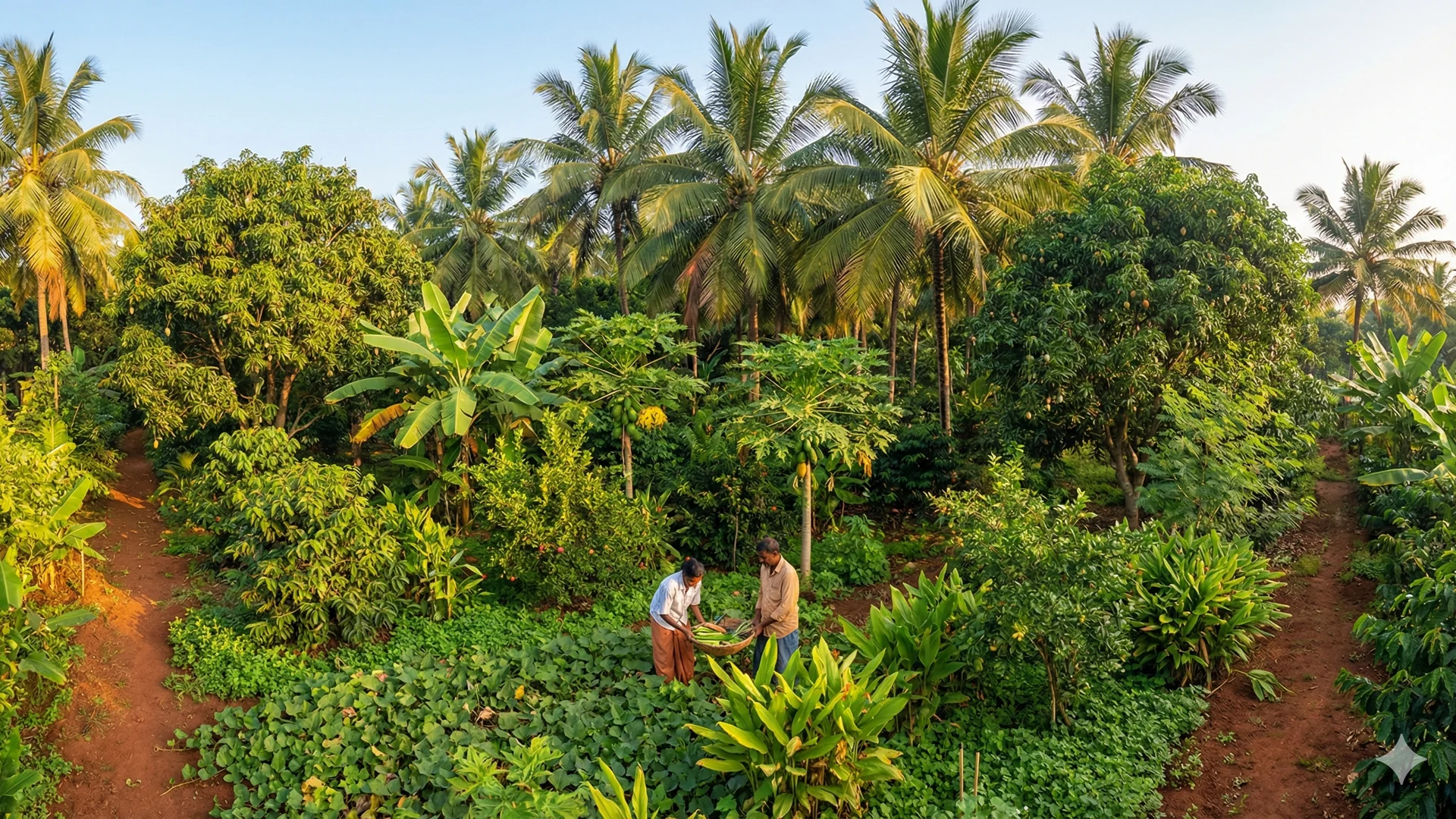
Buying agricultural land is often described as a "minefield" for the uninitiated. While the rewards of owning land are significant, the legal verification process requires precision and patience.
In 2026, farmland investment near Bangalore has entered a new chapter. With renewed interest from IT professionals seeking portfolio diversification, due diligence has become more critical than ever. Legal disputes over agricultural land have surged, making a thorough checklist the difference between a secure investment and a costly headache. This guide is updated as of April 2026 to reflect the latest regulatory landscape.
⚖️ Important Legal Update — Karnataka Land Reforms Act
Karnataka's Sections 79A and 79B were repealed in 2020. Indian citizens may now purchase agricultural land in Karnataka. This changed the pre-2020 rules that barred non-agriculturists. Land ceiling limits still apply; your situation is confirmed on a call. For a full state-by-state breakdown, see our Legal Guide to Buying Farmland in Karnataka & Tamil Nadu.
Tamil Nadu has no restrictions on non-agriculturists purchasing agricultural land. Land ceiling limits still apply; your situation is confirmed on a call.
The Nuances of State Laws
Because Bangalore sits near the border, many investors look at land in both Karnataka and Tamil Nadu. It is crucial to understand that agricultural laws are state-specific. What works in Hosur (Tamil Nadu) might not apply in Kanakapura (Karnataka). This checklist covers the universal essentials and highlights specific regional differences. For a broader overview of the legal landscape, read our Legal Guide to Buying Farmland in Karnataka & Tamil Nadu.
The Essential 20-Point Checklist
Category A: Primary Documents (The "Foundation")
- Mother Deed (Primary Title): Tracing the history of the property back at least 30-40 years to ensure a clear chain of custody.
- RTC / Pahani (Karnataka): The Record of Rights, Tenancy, and Crops. Verify the name of the owner, extent of land, and type of soil.
- Patta / Chitta (Tamil Nadu): The equivalent of RTC. It proves who owns the land according to the government revenue records.
- Encumbrance Certificate (EC): A record of all registered transactions on the property. Ensure a "Nil EC" for the last 30 years or verify existing mortgages.
- Akarband & Tippani: Survey documents that define the boundaries and dimensions of the plot.
Legal-First Managed Farms
At One Acre Farms, we perform 100% of the legal due diligence before a project is even announced. We only sell land with 'A-Grade' titles.
See our Legal FAQCategory B: Eligibility & Restrictions
- Title and Encumbrance: Verify the 30-year encumbrance certificate shows no pending disputes, loans, or government attachments on the land.
- PTCL Act Clarification: Ensure the land does not belong to the Scheduled Caste or Scheduled Tribe community, which has specific restrictions on sale (Prestige of Title Checklist).
- Conversion Status: Is the land still agricultural, or has it been 'Converted' for residential use?
- Boundary Fencing & Possession: Physical verification that the boundaries match the survey maps and that there are no encroachments.
- Survey Number Verification: Cross-check the survey number on the ground with the village map (Bhoomi or TN e-services).
Category C: Clearances & NOCs
- Village Map Verification: Ensure there are no proposed roads or buffer zones (like 'Kharab' land) running through the property.
- Revenue Sketch: A detailed drawing from the revenue department showing the exact shape of your plot.
- Mutation Records (J-Slip): Proving that the revenue department has updated their records to reflect current ownership. For more on this, read our guide on Demystifying RTC & Mutation.
- Tax Paid Receipts: Ensure all land taxes are up to date and in the name of the current seller.
- Family Tree (Vamsha Vruksha): Essential to ensure all legal heirs of the seller have consented to the sale.
Common Title Defects to Watch For
Even with a pile of documents, certain "hidden" defects can ruin a transaction. One of the most common issues is **unrecorded legal heirs**. In many families, land is partitioned orally but never updated in the revenue records. Years later, a distant cousin might surface claiming a right to your property.
Another significant risk is **Minor's Interest**. If any of the sellers are minors, a court order is typically required to sell their portion of the land. Bypassing this step can lead to a voidable sale when the minor reaches adulthood. This is why we insist on a "clean Family Tree" verified by local authorities.
Finally, check for **Acquisition Notifications**. Sometimes, the government notifies land for industrial development or infrastructure projects. While the farmer might still have possession, the "right to sell" may have been restricted. Verify this at the KIADB or NHAI offices if the land is near a growth corridor.
Category D: The Transaction Process
- Sale Agreement: Drafting a detailed agreement with clear timelines and penalty clauses for non-performance.
- Public Notice: Publishing a notice in local newspapers to invite any objections before registration.
- Registration (Sub-Registrar Office): The final act of transferring title. Always register at the actual guideline value or higher.
- Change of Mutation (Varas-Khata): Immediately applying for the name change in government records after registration.
- Physical Handover: Ensuring a 'Panchanama' or similar document is prepared for the physical possession.
The Future of Land Governance: Digital Records
The good news for investors is that both Karnataka (Bhoomi) and Tamil Nadu (TN e-services) have made massive strides in digitizing land records. You can now verify RTCs and Pattas from your smartphone. While these digital records are not "certified title proofs" in a court of law, they serve as an incredible first-level filter.
However, "Garbage In, Garbage Out" applies to digital records too. If the manual entry at the village level was flawed, the digital record will be too. Always correlate digital data with physical, certified copies from the sub-registrar's office. This level of rigor is what keeps your investment safe from the fluctuations of the real estate market.
The Value of Expert Assistance
Most urban professionals find the above list overwhelming. This is the primary reason why **Managed Farmland** has gained such massive popularity. When you buy through a company like One Acre Farms, the legal heavy lifting is done for you. Our legal team spends months verifying these 20 points (and many others) so you don't have to.
Conclusion: Due Diligence is Non-Negotiable
Owning land is one of the most rewarding investments you can make, but its value is entirely dependent on the strength of its title. By following this 20-point checklist, you're not just buying land; you're buying peace of mind.
Request a Legal Consultation
Have specific questions about a piece of land or want to understand our verification process in depth? Our experts are here to help.
Explore More Farm Opportunities
- For a complete overview, read our legal guide to buying farmland in Karnataka and Tamil Nadu.
- Discover your ideal rural escape with our premium farmland near Bangalore.
- Deepen your research by exploring our managed farmland plots near Bangalore.
- For a broader legal perspective, see our Legal Guide to Buying Farmland in Karnataka & Tamil Nadu.
- Use our Farmland Due Diligence Checklist to verify any plot before purchasing.
Myth vs. Reality
"I can buy agri land in Karnataka without being a farmer."
"patta in Tamil Nadu is the same as a Sale Deed."
"If the EC is clear, the land is safe."
Disclaimer: Land laws and regulations vary significantly between states (Karnataka vs. Tamil Nadu) and are subject to frequent amendments. This guide is for informational purposes only and does not constitute legal advice. Always perform independent due diligence through a qualified advocate.
Interested in owning farmland?
Schedule a free site visit to explore our managed farmland projects near Bangalore.