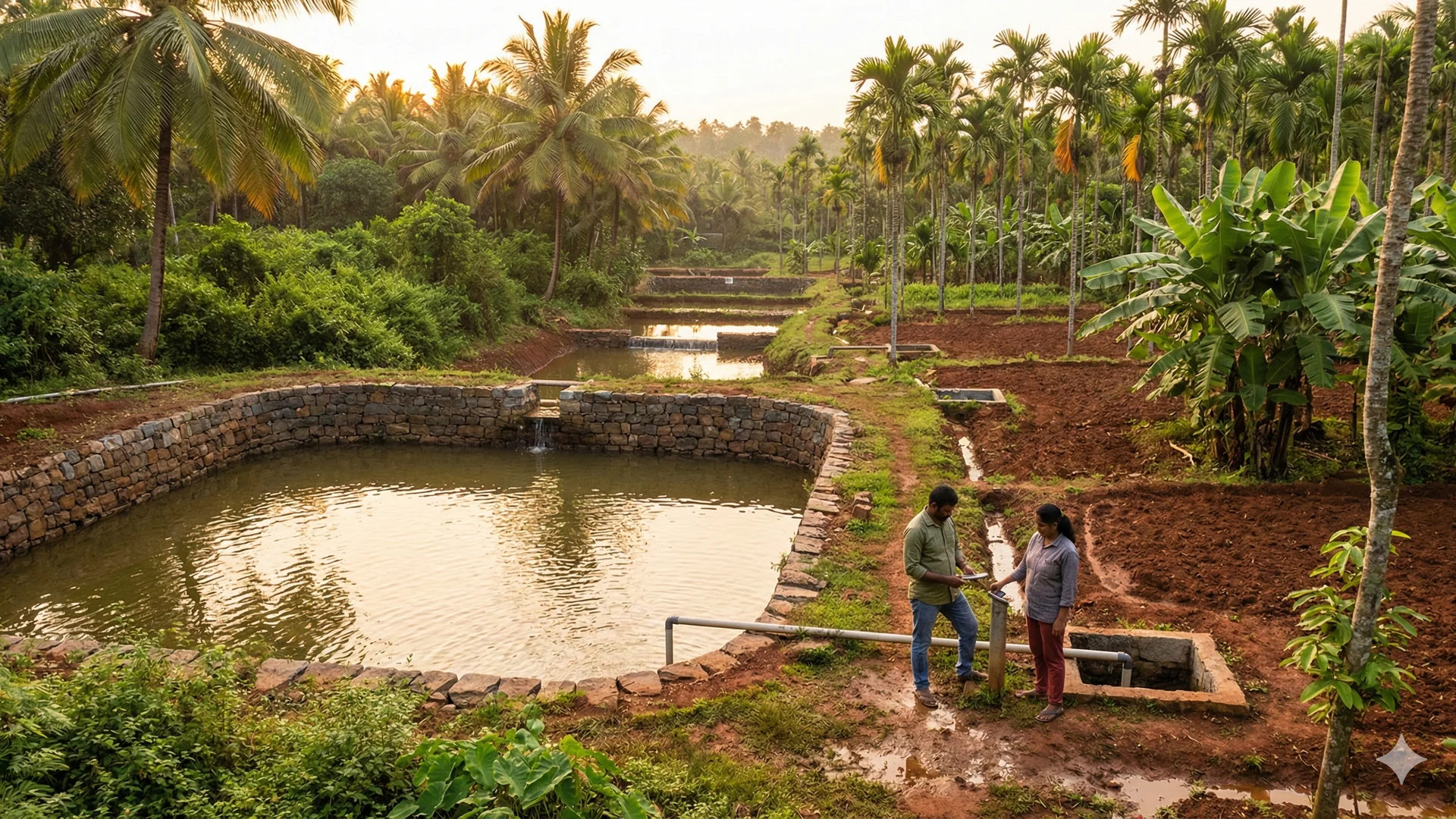
The honest answer to "farmland or flat?" is a table, not a slogan. A flat pays you rent from month one and is easier to sell; farmland has no EMI-friendly rent cheque, but it doesn't depreciate, its income is tax-free under Section 10(1), and on the right corridor its appreciation has historically outrun apartment CAGR by a wide margin.
This comparison uses real numbers where they exist: publicly observable Bangalore apartment performance, and actual completed-project data from managed farmland in the Thalli–Hosur corridor. Where a number is a range or an estimate, we say so.
The comparison at a glance
| Factor | Flat (Bangalore) | Managed farmland (near Bangalore) |
|---|---|---|
| Price appreciation | ~5–8% CAGR typical; older stock lags | Corridor-driven; completed OAF projects: ~75–230% over project lifetimes |
| Income | Rent from day 1: ~2–4% gross yield, taxable | Harvest income from ~year 2, tax-exempt u/s 10(1), seasonal |
| Depreciation | Building ages; refurbishment cycles | Land does not depreciate; trees appreciate as they mature |
| Liquidity | Higher: big buyer pool, mortgages available | Lower: plan 7–15 year hold |
| Leverage | Home loans up to ~80% LTV | Limited; largely self-funded |
| Taxes | Rent taxable; 24/80C deductions on loans | Income exempt (10(1)); 54B rollover; rural land may sit outside capital-asset definition (2(14)) |
| Running costs | Society charges ₹3–8/sq ft/mo + property tax | Annual farm management fee, partly offset by produce |
| Usable by family | Yes — a home | Yes — weekend farm, food source, legacy asset |
Appreciation: the structural difference
A flat's price has a ceiling built in: every year the building ages, and new towers with newer amenities launch next door. Bangalore's long-run apartment CAGR of roughly 5–8% reflects that — respectable, but rarely wealth-changing after costs. Land works the other way. Supply of well-located agricultural land within 100 km of Bangalore shrinks every year while highways, industrial corridors, and the airport economy push demand outward. That is why corridor selection dominates farmland returns: the Thalli–Hosur belt's completed managed projects — Hilltop (~230%), Lakeside (~220%), Country Side (~200%) — rode exactly that dynamic. The forthcoming detail matters: those are completed, sold-out project figures from The One Acre Farms, not projections.
Income: rent cheque vs harvest
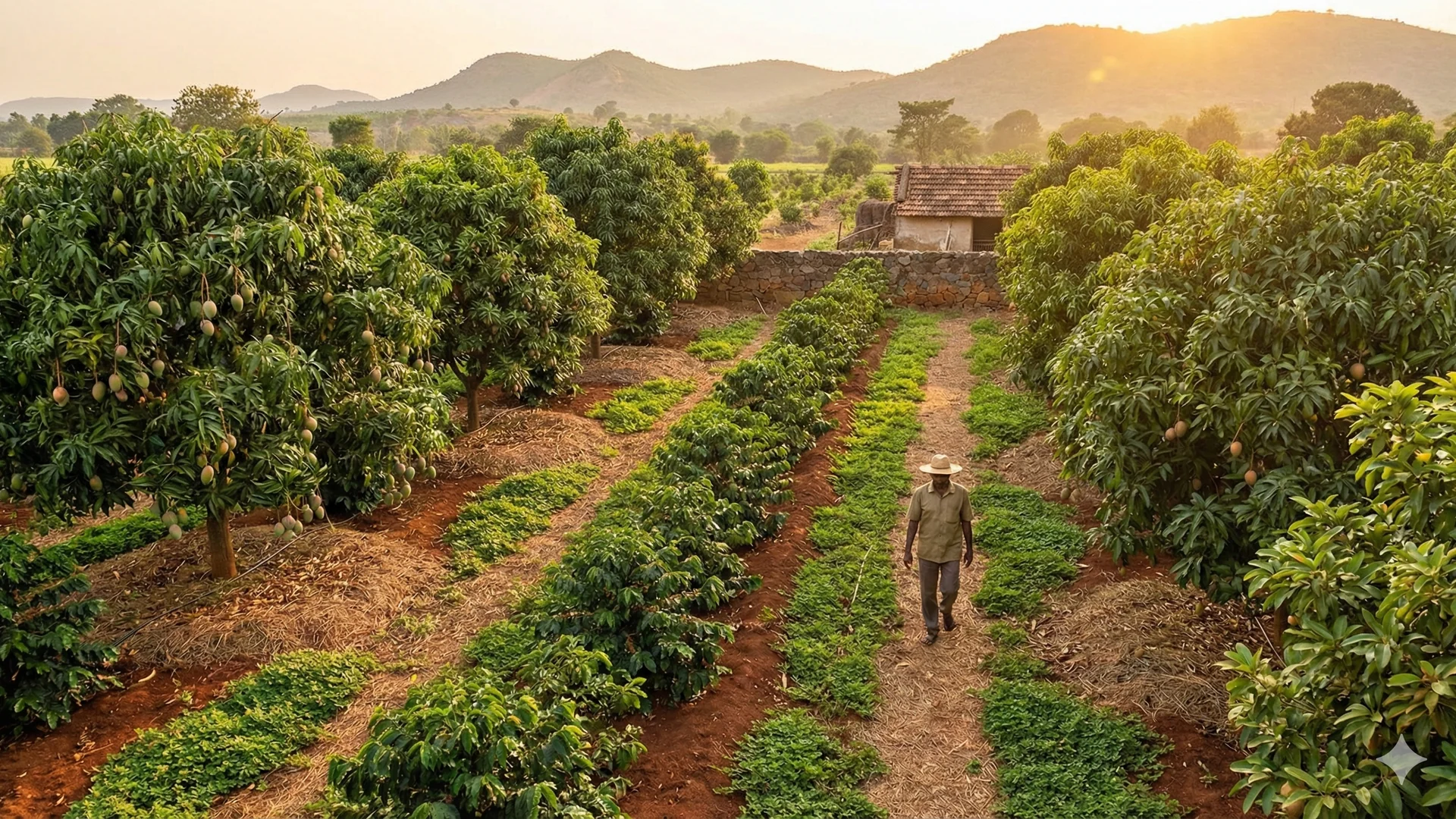
Rent is farmland's weakest point and the flat's strongest. A ₹1 crore flat renting at ₹25–30k/month yields ~3% gross before tax, maintenance, and vacancy — but it starts immediately. Farmland income starts around year two (vegetables, banana, papaya, inter-crops), builds as orchards mature (mango, guava, coconut), and can end in a large timber payout a decade-plus out. Two differences change the math over long horizons: farm income is exempt from income tax under Section 10(1), and it grows as plantations mature instead of being renegotiated with tenants. Model both cash-flow shapes with our farmland ROI calculator.
Taxes: quietly decisive
- Section 10(1): agricultural income is fully exempt from income tax.
- Section 2(14): qualifying rural agricultural land is not a "capital asset" — sale gains can fall outside capital gains tax entirely (location tests apply).
- Section 54B: reinvesting gains from agricultural land into other agricultural land within two years defers/exempts capital gains.
- Flats: home-loan interest (Section 24) and principal (80C) deductions help during the loan; rental income is taxed at slab; LTCG applies on sale with indexation rules as amended.
Agricultural income is exempt under Section 10(1) of the Income Tax Act, 1961. Tax outcomes depend on land classification and your facts — consult a Chartered Accountant.
Risk: what actually goes wrong in each
Flats fail quietly: oversupplied micro-markets, aging stock, society disputes, yields that never beat a fixed deposit after costs. Farmland fails loudly: bad title, encroachment, water failure, or a "farmland" product that is really an unregistered share of someone else's land. The farmland risks are all addressable with due diligence — 30-year title chain, Encumbrance Certificate, revenue records, registered sale deed in your name, verified borewells. That verification burden is exactly what the managed model exists to carry: at The One Acre Farms roughly 85% of scouted parcels are rejected in legal audit before anything is offered to buyers. Read the full checklist in our Karnataka & Tamil Nadu farmland legal guide.
Inheritance and what you're really buying
Both assets pass to heirs, but they age differently. A 30-year-old flat is a maintenance liability with a land-share; a 30-year-old farm is mature orchard and timber on appreciating land — NRIs cannot buy agricultural land directly under FEMA, but they can inherit it, which makes farmland a workable generational asset even for families with children abroad. And unlike a financial asset, a farm is usable while you hold it: weekends, harvests your kitchen actually eats, and a place your children associate with soil rather than screens.
The verdict
Choose a flat if you need monthly income now, want leverage, or may need to exit within five years. Choose farmland if your horizon is 7–15 years, you already have equity/debt exposure, and you want a non-depreciating, tax-advantaged real asset with corridor-driven upside. Many of our 130+ co-farmer families own both — the flat pays the bills; the farm builds the legacy. If you want to pressure-test the farmland side in person, visit a working project near Hosur — site visits run Thursday–Sunday.
Disclaimer: Farmland investment involves market risks, including biological and climatic factors. Projected returns (ROI) are based on historical data and current market trends but are not guaranteed. Please consult with a financial advisor before making significant investment decisions.
Frequently Asked Questions
Interested in owning farmland?
Schedule a free site visit to explore our managed farmland projects near Bangalore.