Is managed farmland a good investment in India? Sometimes. For some people. We sell it, and that answer does not change — because the buyers who understand the risks stay for a decade, and the ones sold a fantasy become the industry's angriest critics.
Most articles on this question are written by companies listing five benefits and a WhatsApp button. This one starts where those end: with the five ways farmland investments actually go wrong, what reduces each risk, who should not buy at all — and only then, what the verified numbers say when it goes right.
Risk 1: Water
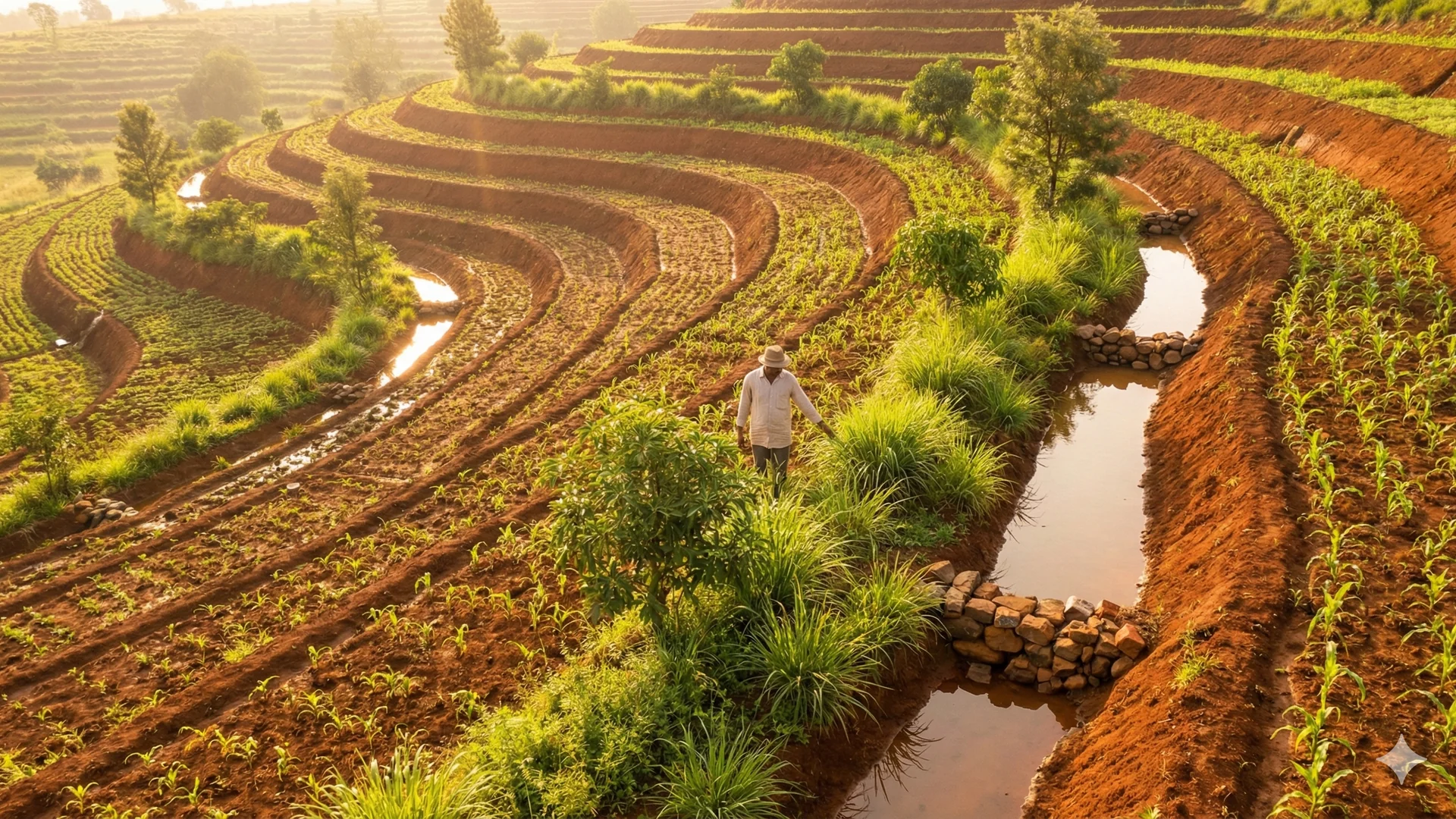
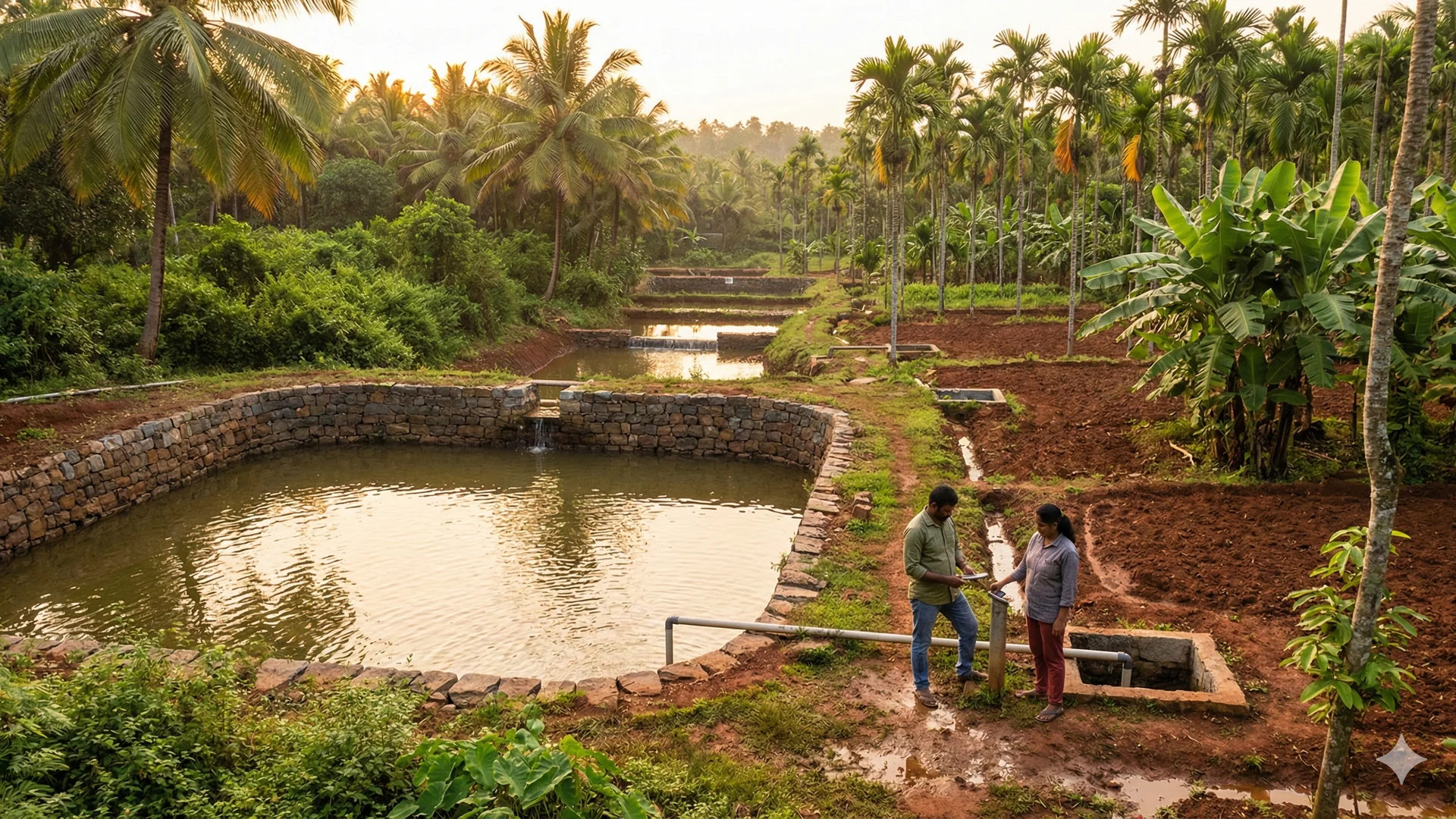
A farm without water is scenery. Borewells in the belts around Bangalore fail two ways: a dry bore at drilling (rocky terrain can defeat even good surveys) and depletion years later as neighbouring farms draw the same aquifer. What reduces it: corridors with better water tables (a real reason the elevated Thalli belt is valued), hydrogeological surveys over dowsers, drip irrigation, farm ponds, and an operator who budgets for a second borewell rather than pretending the first is immortal. What to ask: current bore depth and yield, what happens — contractually — if it fails.
Risk 2: Title
The most dangerous risks are invisible at purchase. Land once granted to protected communities (PTCL-type cases in Karnataka) can void a sale years after registration; missing heir consents surface as claims; boundary paperwork that never matched the fence becomes a dispute the day you build one. What reduces it: a 30-year title scrub, ratified family trees, EC, revenue records, and a survey that matches the ground — done before money moves. At The One Acre Farms roughly 85% of parcels we scout fail this audit and are rejected; that rejection rate is the product. Our legal guide lists every document by state.
Risk 3: Liquidity
Farmland sells in months, not days. There is no exchange, financing for buyers is limited, and price discovery is conversational. What reduces it: buying in corridors with real demand, holding a clean individually-registered title (the single biggest resale accelerant), and sizing the investment so you never have to sell in a hurry. Plan 7–15 years. If that sentence hurts, see "who should not buy" below. That said, exits do happen — two documented co-farmer resales, with names and prices, are here.
Risk 4: The operator
Here is the question most brochures hope you never ask: what happens if the management company disappears? The answer depends entirely on structure. If your acre is registered to you by individual sale deed, the worst case is losing a service — the land, trees, and appreciation remain yours, and another operator (or you) can take over. If what you bought is a "unit", a "share", or a farming agreement standing in for ownership, the worst case is losing everything to someone else's insolvency. This single structural check — whose name is on the deed? — separates managed farmland from schemes wearing its clothes. The industry's checkered cousins (teak plantation schemes of the 1990s) all failed on exactly this point.
Risk 5: Crops, weather, and honest income math
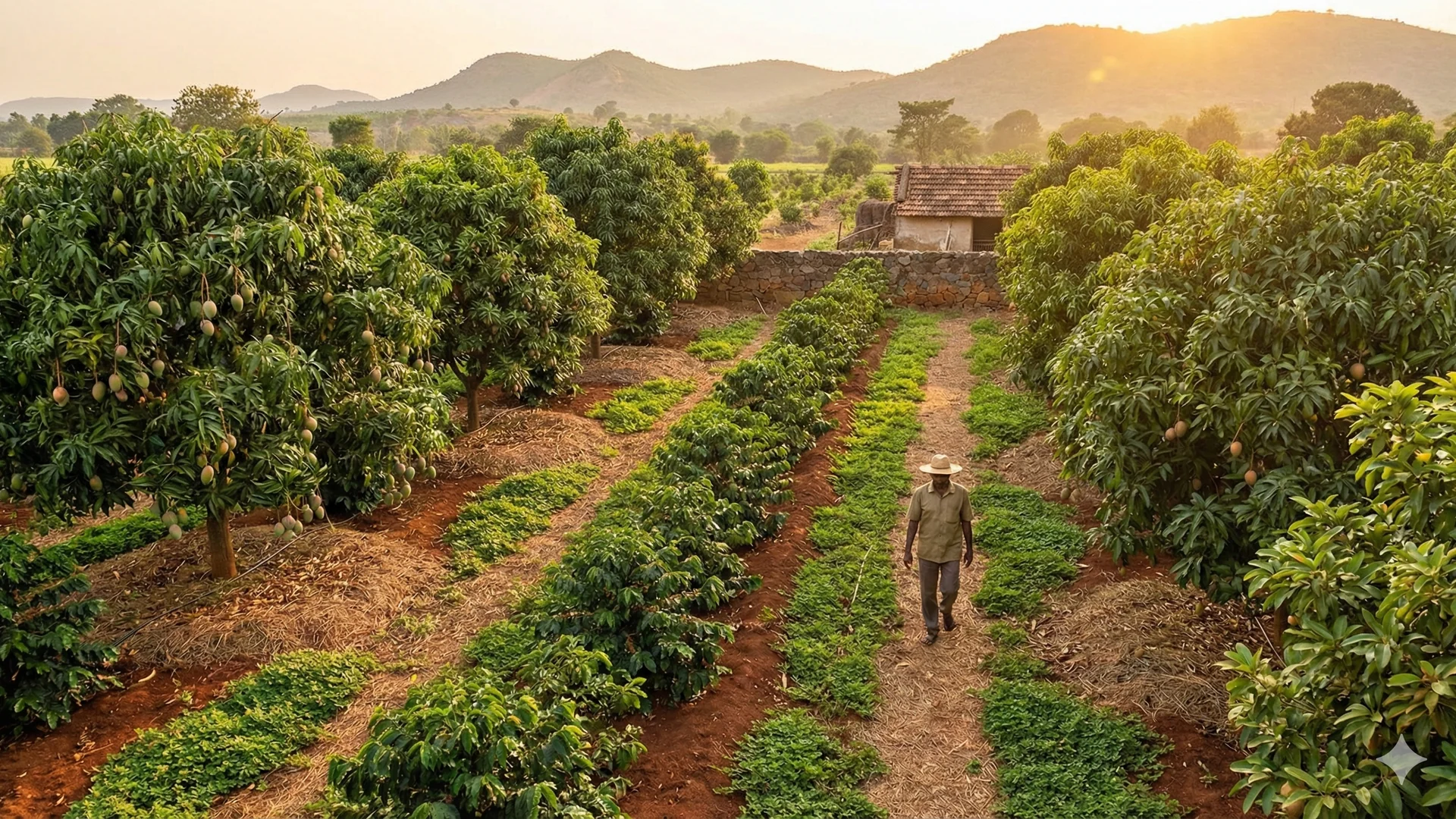
Harvest income is real but seasonal, crop-dependent, and starts around year two — vegetables and inter-crops first, orchard fruit as trees mature, timber a decade out. A drought year produces less. Anyone quoting you a fixed "yield percentage" as if farmland were a bond is either naive or hoping you are. Treat income as a growing, tax-exempt (Section 10(1)) bonus on top of the appreciation thesis — not the thesis. Model scenarios with the ROI calculator and stress the pessimistic one.
Who should not buy managed farmland
- Anyone who might need this money back within ~5 years.
- Anyone replacing a monthly-income need — this is not rent.
- NRIs who cannot structure the purchase within FEMA rules (agricultural land cannot be directly bought by NRIs anywhere in India; it can be inherited).
- Anyone for whom one acre would dominate their net worth — illiquid assets should diversify a portfolio, not become it.
- Anyone unwilling to visit the land and read the documents before buying. If you won't spend one Saturday verifying, this asset class is not for you.
And when it works — the verified numbers
With risks managed, the results near Bangalore have been substantial. The One Acre Farms' four completed, sold-out projects in the Thalli–Hosur corridor — actual transactions, not projections — appreciated approximately Hilltop ~230% (launched 2019 at ₹89–95/sqft, actual co-farmer resales ~₹300/sqft in 2026), Lakeside ~220%, Country Side ~200%, and Misty Valley ~75–150% as the youngest. Corridor land prices in these belts have been roughly doubling every 2–3 years, driven by shrinking supply of documented, road-connected land and expanding infrastructure. On top sits harvest income the tax code treats kindly, and a weekend asset your family actually uses — the part no spreadsheet captures.
So: a good investment? For a diversified buyer with a decade of patience, verified title in their own name, water they have asked hard questions about, and an operator with a completed-project record — the historical evidence says yes. For everyone else, the honest answer is the one that costs us a sale: not yet. Start with the complete guide, walk a working farm, and decide with your eyes open — here is exactly how the model works, fees included.
Disclaimer: Farmland investment involves market risks, including biological and climatic factors. Projected returns (ROI) are based on historical data and current market trends but are not guaranteed. Please consult with a financial advisor before making significant investment decisions.
Frequently Asked Questions
Interested in owning farmland?
Schedule a free site visit to explore our managed farmland projects near Bangalore.