Two crops dominate the conversation at every farmland investor meetup in Bangalore: Sandalwood, for its jaw-dropping ₹10,000-per-kg heartwood prices, and Mango, for its reliable annual income. Which one actually makes more sense on a one-acre farm near Thalli?
Key Takeaways
- 1. Sandalwood: 15–25 year cycle, ₹10,000+/kg heartwood, high value but requires patience and a government felling permit (CITIES-regulated)
- 2. Mango (Alphonso): annual income from year 4–5 onwards, ₹1–3L/year per acre at scale, reliable cash flow with lower risk
- 3. Intercropping model (sandalwood as canopy, mango as sub-canopy) optimises both timelines — harvest mango while sandalwood matures
- 4. OAF manages the full cycle — planting, permits, maintenance, harvest, and sale — so you earn without day-to-day involvement
- 5. Agricultural income from both crops is exempt under Section 10(1) IT Act — tax-free income subject to CA consultation
Both crops grow on our farms
Our managed plots near Thalli support Alphonso mango, sandalwood intercropping, and timber species — selected by our agronomists for Thalli's specific climate and soil profile.
See What We GrowWhy Thalli Is the Right Climate for Both
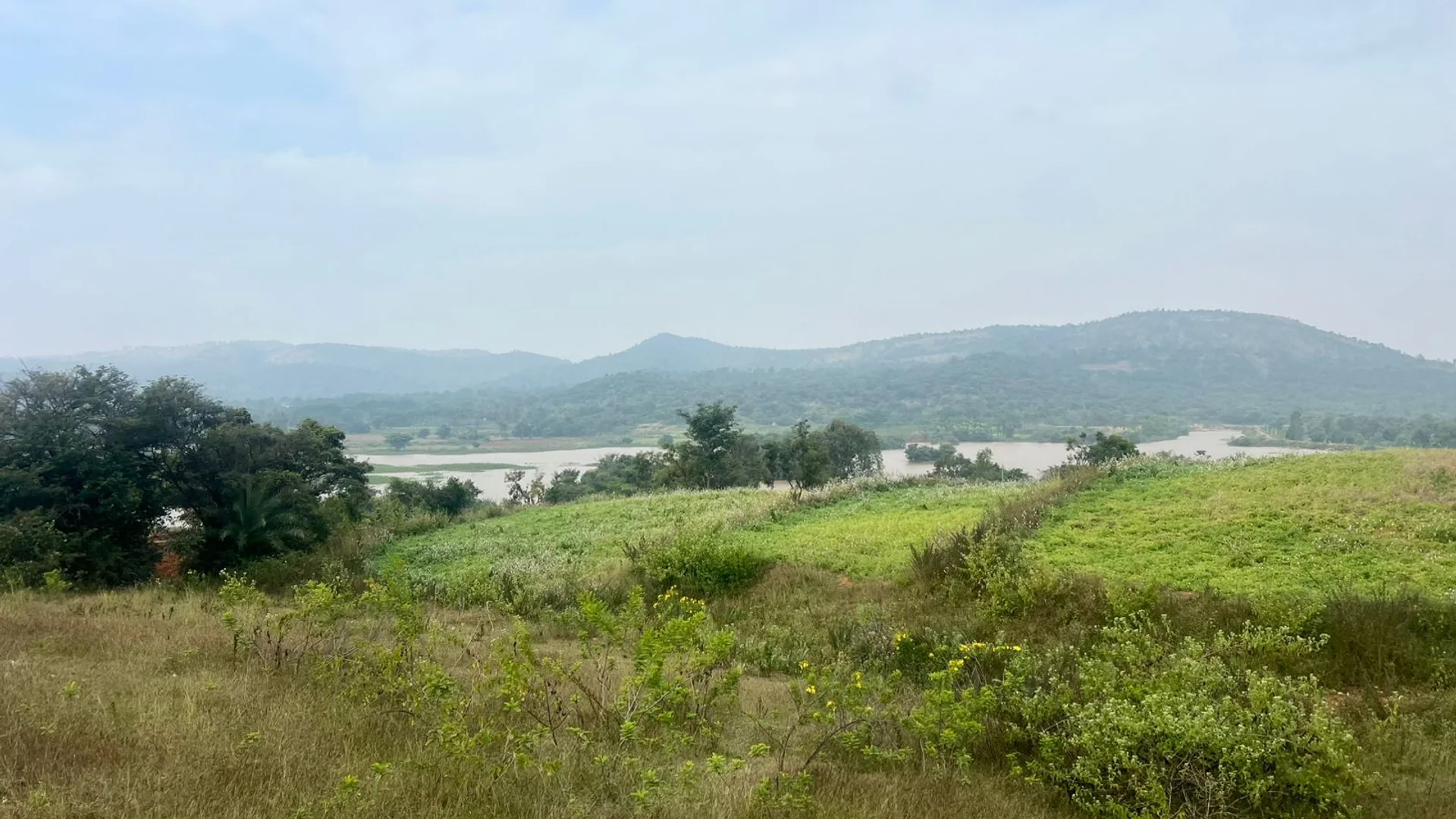
At 1,000–1,200 feet elevation and receiving 900–1,100mm of annual rainfall, Thalli sits in a sweet spot for both crops. The cooler nights (especially November–February) trigger excellent mango flowering, while the well-draining red laterite soil that sandalwood demands is abundant in the Krishnagiri district. This isn't incidental — it's why we chose Thalli a decade ago.
Thalli's proximity to the Cauvery basin also ensures relatively stable groundwater tables, critical for sandalwood's slow, decade-long root system development.
Sandalwood (Chandan) — The Long Game
The Numbers
| Metric | Indicative Values (per acre, Thalli conditions) |
|---|---|
| Trees per acre | 100–120 sandalwood trees (with host plants) |
| First income timeline | 12–15 years (heartwood begins forming at 10 years) |
| Heartwood yield (matured tree) | 8–15 kg per tree at 15 years |
| Heartwood price (2025) | ₹8,000–12,000 per kg (Grade A) |
| Total acre income at harvest | ₹80 L – ₹1.5 Cr (15-year harvest event) |
| Annual income during growth | Near zero (sandalwood intercrop can earn ₹30K–60K/yr) |
| Legal requirement | Registered with Forest Dept; transit permit needed at harvest |
| Primary risk | Theft, smuggling; red sanders confusion; 15-year illiquidity |
The Reality Behind the Numbers
Sandalwood's headline ₹10,000/kg price is real — but that's for Grade A heartwood from a 20+ year tree in ideal conditions. The actual average from a managed 15-year plantation in the Thalli region is closer to ₹6,000–8,000/kg after accounting for tree mortality (10–15%), variable heartwood formation, and sapwood exclusion (sapwood has very little market value).
The deeper challenge is 15 years of near-zero cash income. Your one acre of sandalwood ties up capital for over a decade with no annual return. For most urban investors who already have high-income jobs and are treating farmland as a long-term appreciating asset, this is fine. For those expecting annual income from their farm, sandalwood is a mismatch.
Sandalwood is best for:
- ✓ Investors with a 15–20 year horizon who want a "biological fixed deposit"
- ✓ Those who understand the tree is an asset that appreciates annually (heartwood content grows each year)
- ✓ Land that already has intercrop income from another component (mahogany, turmeric, etc.)
- ✗ Not suitable if you need farm income in the first 10 years
Mango (Alphonso/Banganapalli) — The Annual Earner
The Numbers
| Metric | Indicative Values (per acre, Thalli conditions) |
|---|---|
| Trees per acre | 40 trees (Alphonso, 10×10m spacing) or 70 trees (Banganapalli, dense) |
| First income timeline | 3–4 years (grafted saplings); commercial yield from Year 5 |
| Yield at maturity (10+ years) | 150–250 kg per tree per season |
| Farm gate price | ₹30–80 per kg (Banganapalli) | ₹120–250/kg (Alphonso) |
| Gross annual income (mature acre) | ₹1.5 L – ₹4 L / year (good years; alternating bearing affects yield) |
| Input cost (managed) | ₹40,000 – 80,000 per acre per year |
| Net annual income | ₹80,000 – ₹3 L (highly variable based on variety, year, market) |
| Primary risk | Alternating bearing (off years), weather (unseasonal rain during flowering), market price volatility |
What 10 Years in Thalli Has Taught Us
Thalli's climate gives Alphonso mango a quality advantage — the cool nights trigger anthesis (flower initiation) without the need for paclobutrazol intervention that's common in hotter plains. Our Lakeside Farm Retreat plots, planted in 2015, consistently yield 150–200 kg per Alphonso tree in good years.
The honest caveat: mango is an alternating bearer. Good year followed by a lower year is the norm, not the exception. Income projections that assume maximum yield every year are misleading. A realistic 10-year average for Alphonso in Thalli, net of management costs, is ₹1 – 1.5 Lakhs per acre per year — meaningful supplementary income, not a salary replacement.
The Verdict: Is It Either/Or?
Most experienced managed farmland owners in Thalli don't choose one — they intercrop. A typical one-acre design in our projects uses:
- Outer border rows — 12–15 sandalwood trees (long-duration biological asset)
- Main crop — 30–35 Alphonso or Banganapalli mango trees (annual income from Year 5)
- Understory — Turmeric, moringa, or banana during the first 3 years (early income)
This "polyculture income stack" design means: ₹50K–1L income from Year 3 (turmeric/banana), ₹1–2L from Year 5 (mango starts), and a ₹50–100L lump sum at Year 15 (sandalwood harvest). Three income events over 15 years from the same acre.

Lakeside Farm Retreat
Own a piece of paradise overlooking the serene waters near Thalli. Perfect for weekend getaways and long-term appreciation.
Explore More Farm Opportunities
- For a complete overview, read our farmland investment guide.
- Green Appreciation
- The Evolution Of Farm Communities
- Discover your ideal rural escape with our farmland ROI calculator.
- Deepen your research by exploring our Guntas to Acres converter.
- permaculture practices near Bangalore
- eco farm near Bangalore
- managed farmland near Bangalore
Myth vs. Reality
"Sandalwood will make me a crore in 10 years."
"Mango farming income is passive and predictable."
"I can plant sandalwood on any farm land I buy."
Disclaimer: Farmland investment involves market risks, including biological and climatic factors. Projected returns (ROI) are based on historical data and current market trends but are not guaranteed. Please consult with a financial advisor before making significant investment decisions.
Interested in owning farmland?
Schedule a free site visit to explore our managed farmland projects near Bangalore.